

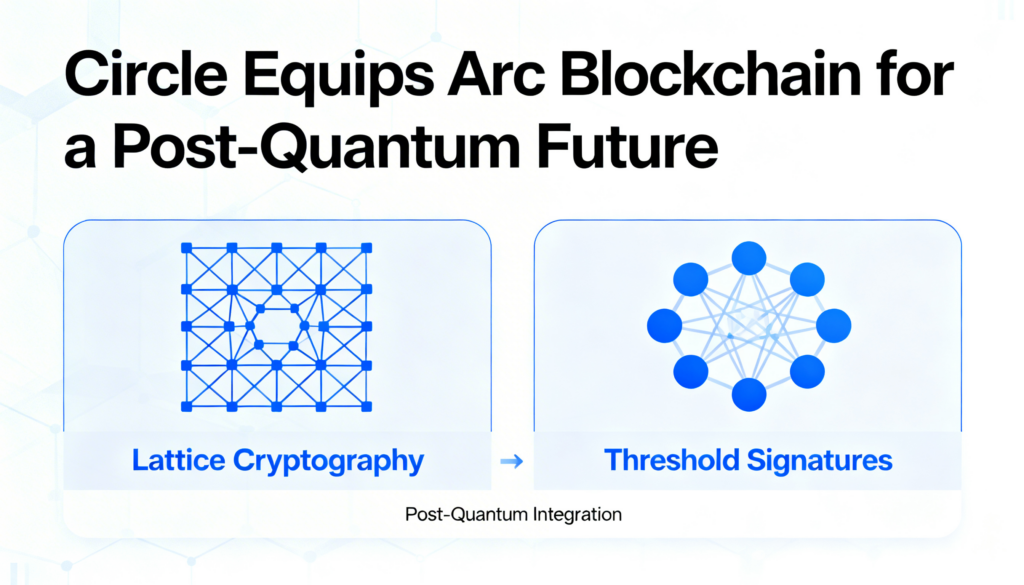
Circle is building its Arc blockchain with a long-term view in mind, aiming to protect users from future quantum computing threats from the very start. The Layer-1 network said it will allow users to create quantum-resistant wallets at launch, rather than adding such protections later.
Designed for stablecoin-driven finance and institutional use, Arc will introduce a post-quantum signature scheme on mainnet, according to a Thursday update. While no launch date was provided, the feature is intended to give users a clear path to secure their assets against next-generation computing risks from day one.
This approach marks a departure from older blockchains, which largely rely on existing cryptographic systems that could eventually be broken by sufficiently advanced quantum machines. With Arc, users can choose signature methods specifically built to resist such attacks when setting up their wallets.
Blockchain wallets depend on cryptographic keys to verify ownership and authorize transactions. Today’s systems are considered secure against classical computers, but quantum computing could change that. In theory, powerful quantum machines may be able to extract private keys—either gradually over time or almost instantly—posing a serious threat to digital assets.
Arc’s solution is to integrate quantum-resistant cryptography directly into its foundation, rather than treating it as a future upgrade.
The announcement comes amid growing industry focus on quantum risk, particularly after a recent Google report examined potential vulnerabilities in networks like Bitcoin and Ethereum. At the same time, developers are actively researching solutions, and firms such as Postquant Labs are exploring how quantum technology might also enhance blockchain systems.
Arc’s design could resonate with institutional players seeking long-term security. The network launched its testnet in October and uses Circle’s USDC stablecoin for transaction fees. With a market cap of about $77.5 billion, USDC is among the largest stablecoins and is widely used in regulated financial environments.
Looking ahead, Arc plans to extend quantum-resistant protections beyond wallets. Its near-term goals include securing private balances, confidential transactions, and recipient data using advanced cryptographic techniques.
In the mid-term, the focus shifts to reinforcing the broader network infrastructure—protecting validator cloud systems, hardware security modules, and node-to-node communications from potential quantum attack vectors. The strategy is to secure not just individual components, but the entire system architecture.
By embedding quantum resistance at its core, Arc is positioning itself as a future-ready blockchain built to meet the security demands of institutional finance in the years ahead
About The Author



More Stories
Bitcoin climbs amid Iran truce discussions, with Algorand extending its rally
An analyst warns Bitcoin may drop to $10,000 if it fails to regain the $75,000 level.
Circle fortifies Arc blockchain against next-generation quantum risks