

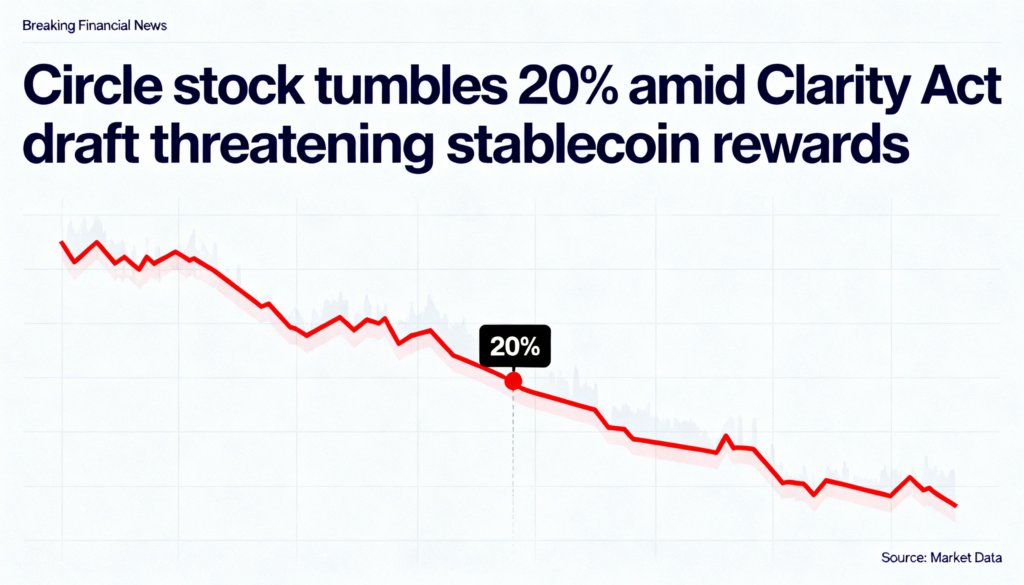
Shares of Circle slid sharply Tuesday after a new draft of U.S. stablecoin legislation sparked concerns over potential limits on yield, pressuring crypto-related equities.
The stock dropped 20%, ending a multi-week rally that had seen gains of more than 100%. Coinbase, which shares in USDC-related revenue, also declined nearly 10%.
The pullback followed developments around the Clarity Act, which could restrict rewards paid on stablecoin balances. Analysts say the proposal may effectively ban yield for passive holdings and limit mechanisms that resemble interest-bearing accounts.
Such changes could weigh on Circle’s near-term growth and reduce the longer-term appeal of holding USDC, particularly on platforms like Coinbase. Yield opportunities—whether via lending or platform incentives—have been a major driver of stablecoin adoption. Removing that component could make it harder for assets like USDC to evolve beyond simple payment tools.
The draft goes further than the GENIUS Act, which already prohibits direct yield payments but allows issuers to share income generated from reserve assets. Circle currently earns interest on USDC reserves and shares part of that with Coinbase, which then distributes rewards to users.
The updated Clarity Act seeks to close that pathway by targeting anything considered “economically equivalent to interest,” potentially eliminating a key incentive for holding stablecoins.
Meanwhile, rival Tether announced it has hired a Big Four accounting firm to conduct a full audit of its reserves, a move that could strengthen confidence in USDT and intensify competition in the stablecoin market.
Despite the steep sell-off, some analysts believe the reaction may be excessive. Circle had rallied roughly 170% since early February prior to the drop, significantly outperforming both crypto peers and broader equities, leaving it vulnerable to a correction.
Looking ahead, sentiment remains cautiously optimistic. Analysts point to growing stablecoin adoption as a long-term positive for Circle, while Coinbase could see a near-term boost if reduced rewards lower its payout obligations tied to USDC revenue.
Some market watchers also argue that alternative incentive models—such as loyalty-based programs—could emerge if direct yield mechanisms are restricted.
While regulatory uncertainty may create short-term pressure, Circle remains a major player in a rapidly expanding market, and its long-term growth outlook is still seen as strong.
About The Author

More Stories
Bitcoin falls under $70K, with Circle’s 16% slide leading declines in crypto stocks.
Has Bitcoin already bottomed near $60,000? Here’s why it might have.
Bitcoin holds steady around the 2023 cost basis, echoing patterns seen in past cycles.