

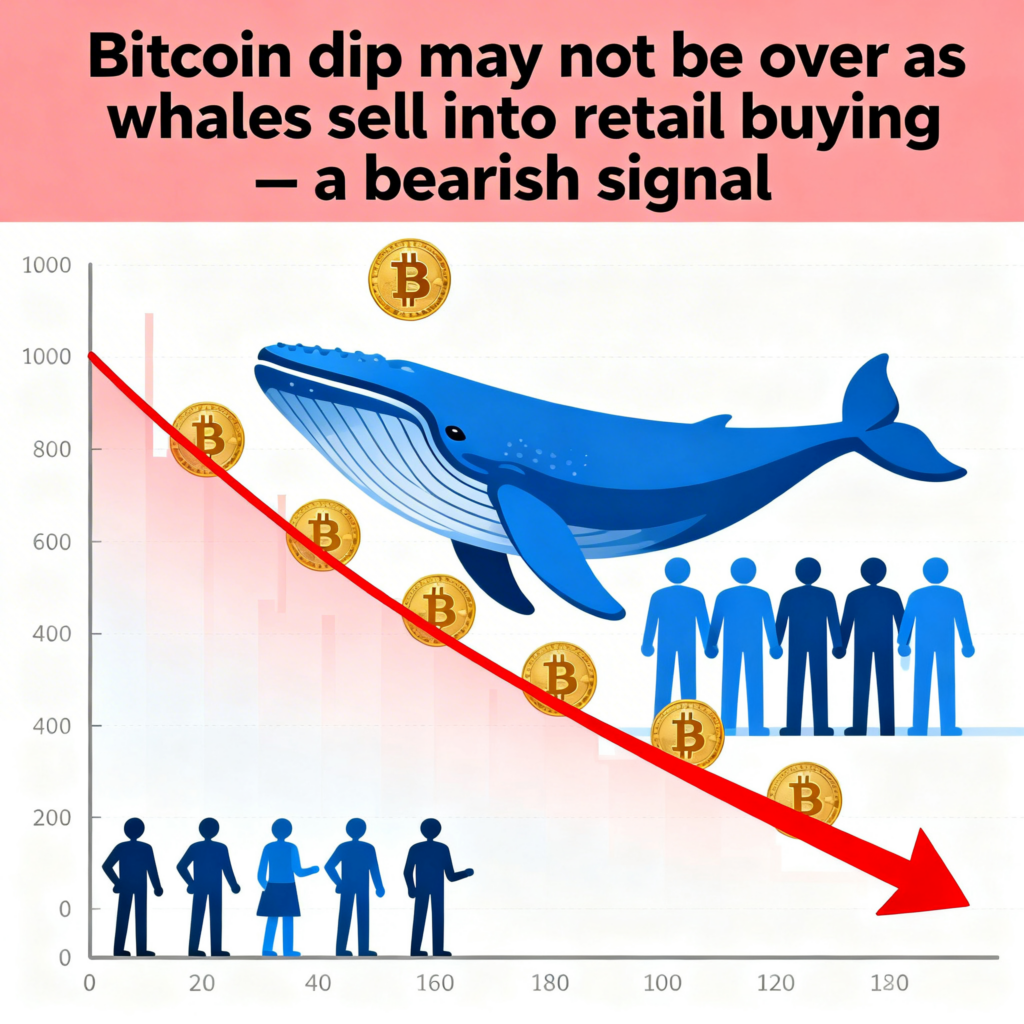
A widening gap between large and small Bitcoin holders may signal that the market’s recent pullback has further to go. Historically, this type of divergence has often appeared before deeper declines, while investor sentiment has also deteriorated. The widely followed Crypto Fear and Greed Index dropped to 12 over the weekend, placing it firmly in “extreme fear” territory.
On-chain data from analytics firm Santiment shows that major holders—commonly known as whales—stepped in to buy during last week’s market panic. Wallets holding between 10 and 10,000 BTC accumulated heavily between Feb. 23 and March 3, when bitcoin traded roughly between $62,900 and $69,600.
That accumulation period coincided with the sharp sell-off tied to geopolitical tensions involving Iran and the early phase of the market’s rebound. However, once bitcoin surged to around $74,000 on Thursday, those same wallets began taking profits. Since then, whales have sold about two-thirds of the bitcoin they acquired during the earlier dip.
At the same time, smaller investors have been increasing their exposure. Wallets holding less than 0.01 BTC continued accumulating as bitcoin slipped back below $70,000 late Friday and into Saturday. According to Santiment, this pattern—retail buyers stepping in while whales distribute holdings—has historically served as a warning that a market correction may not yet be complete.
Additional on-chain insights from analytics firm Glassnode suggest the market remains vulnerable. Roughly 43% of bitcoin’s circulating supply is currently sitting at a loss. This creates persistent selling pressure during price rallies, as many investors who have been underwater for weeks or months attempt to exit positions once prices recover to their cost basis.
That dynamic appeared to unfold when bitcoin’s recovery stalled near $74,000. The rally encountered significant supply from both whales locking in gains and holders looking to break even.
The broader market picture shows large price swings without sustained progress. Bitcoin traded near $60,000 on Feb. 6 and later climbed to roughly $74,000 on March 5. Yet the cryptocurrency is now hovering around $68,000—close to the level it held several weeks ago.
Such volatility combined with limited net movement reflects a market caught between competing forces. Each rally tends to attract sellers eager to exit positions, while dips draw in retail traders hoping to buy the rebound.
Eventually, this standoff is likely to resolve in one of two ways. Selling pressure could gradually fade, allowing bitcoin to break convincingly above $74,000. Alternatively, buying demand could weaken, leaving the market vulnerable to a deeper retest of support near $60,000.
Recent whale activity suggests that many large holders may be leaning toward the latter outcome.
About The Author



More Stories
Crude exported from the Middle East climbs above $100 per barrel. Here’s the potential impact on bitcoin.
Despite behaving like a tech stock at times, bitcoin continues to offer portfolio diversification benefits, according to an analyst
Bitcoin slides past the $68,000 mark as the dollar logs its sharpest weekly gain in a year.