

Crypto markets swung lower at the start of U.S. trading on Tuesday, continuing a now-familiar pattern of sharp opening declines followed by swift recoveries.
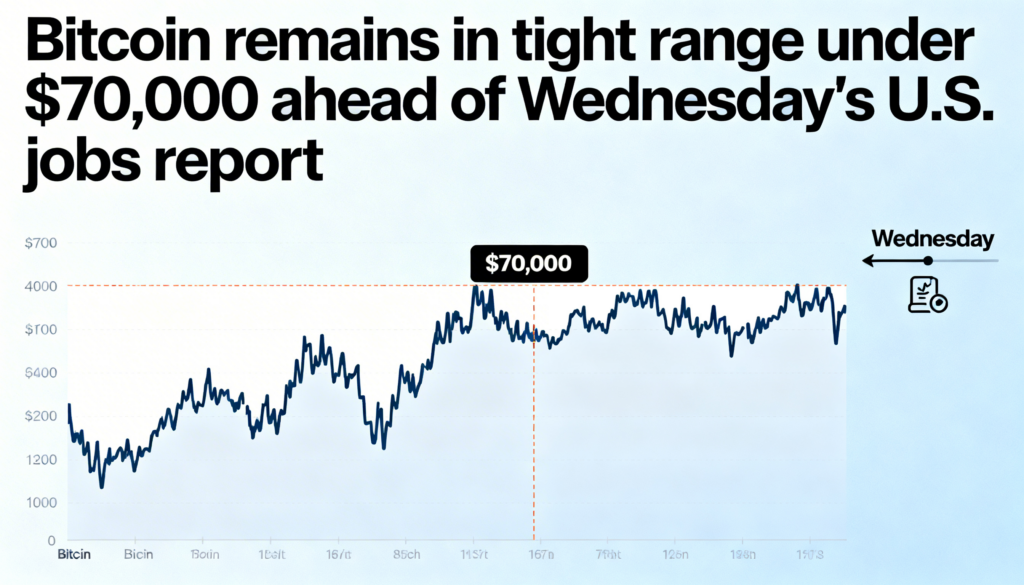
Bitcoin briefly dipped alongside equities before stabilizing, trading around $69,200 by mid-morning — little changed from the previous 24 hours. Ether lagged behind with a steeper pullback, while XRP and Solana also posted modest losses.
Despite bitcoin’s current slide marking its deepest correction since the 2024 halving event, overall trading activity has remained subdued. According to data from Kaiko, volumes during the downturn have been relatively light, suggesting that retail investors are largely staying on the sidelines rather than capitulating.
Kaiko analyst Laurens Fraussen noted that bitcoin is nearing key technical support levels that could determine whether the asset’s traditional four-year cycle pattern remains intact. A decisive break below those levels, he warned, could challenge that long-standing framework.
Market structure may also be playing a role. Trading firm Wintermute said recent price swings have been driven primarily by leveraged derivatives activity rather than strong spot buying. Thin spot volumes have left bitcoin vulnerable to rapid moves caused by crowded futures positioning. The firm characterized last Friday’s rebound as a short squeeze in perpetual futures markets, adding that the renewed volatility caught many traders off guard after a prolonged period of calm.
Attention now turns to the January U.S. jobs report, which was delayed to Wednesday following last month’s brief federal government shutdown. Economists expect the economy to have added roughly 70,000 jobs, up from December’s 50,000 gain, while the unemployment rate is projected to hold steady at 4.4%.
However, comments from Trump administration officials have introduced uncertainty around those forecasts. White House trade counselor Peter Navarro suggested that payroll expectations may need to be revised meaningfully lower. His remarks echoed earlier comments from economic adviser Kevin Hassett, who cautioned investors against overreacting to potentially soft data.
Bond markets appear to be pricing in the possibility of weaker labor figures. The yield on the 10-year U.S. Treasury fell about 5 basis points to 4.14%, reflecting increased demand for government debt.
Under typical conditions, lower yields and expectations for easier Federal Reserve policy tend to support risk assets such as bitcoin. Yet this cycle has diverged from that pattern. Despite the Fed cutting interest rates by 75 basis points in recent months, bitcoin has struggled to sustain upside momentum, highlighting the complex interplay between macro policy, market positioning and crypto-specific dynamics.
About The Author



More Stories
SkyTelecom.io Launches High-Performance Global SIP Calling and SMS Platform with Crypto Payment Support
Robinhood falls short of Q4 revenue expectations as crypto downturn weighs on quarterly results.
Bitcoin is trading more like a tech stock than digital gold, Grayscale says.