


Bitcoin recovered from early-week lows as falling oil prices improved global risk appetite, helping lift cryptocurrencies alongside equities.
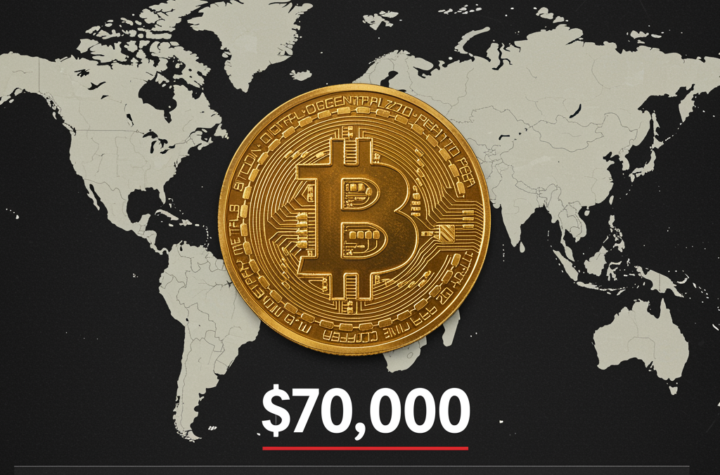
The largest digital asset rose roughly 7% from Monday’s low near $66,000, reaching $71,612 late Tuesday before easing to about $70,036 during Wednesday’s Asian trading hours.
The rebound coincided with a sharp decline in oil prices. Brent Crude fell below $90 per barrel on Wednesday — the first time it has traded under that level since the Middle East conflict began — after dropping around 11% in the previous session.
A key catalyst was a report from The Wall Street Journal indicating that the International Energy Agency is considering the largest coordinated release of oil reserves in its history. The proposal would surpass the 182 million barrels released in 2022 following Russia’s invasion of Ukraine.
The potential reserve release is intended to offset supply disruptions caused by production cuts in the Persian Gulf, which have removed roughly 6% of global oil output since the conflict involving Iran escalated. Those disruptions had previously pushed global fuel prices — including jet fuel and cooking gas — sharply higher.
Oil prices have become a major channel through which the Middle East conflict affects financial markets. Higher crude prices tend to reinforce inflation pressures, which can delay interest-rate cuts and tighten liquidity conditions — developments that typically weigh on risk assets such as cryptocurrencies.
With crude prices easing, some of those macro pressures have moderated.
Bitcoin was trading near $70,036 on Wednesday morning, up about 2.5% for the week. The move from Monday’s low to Tuesday’s peak represented an 8.5% gain in just two days, although prices later gave back part of the advance.
“Bitcoin trading above $70,000 suggests buyers are attempting to push the market out of its recent consolidation phase, but it still needs to demonstrate it can maintain that level,” said Daniel Reis-Faria, CEO of ZeroStack.
He added that leverage had cooled somewhat before the latest rally, which could make the current move more sustainable.
“The question now is whether bitcoin can hold above $70,000 and build momentum, or whether it slips back into the same range that has defined trading in recent weeks,” he said.
Analysts at FxPro noted that bitcoin has been forming a pattern of higher local lows since late February, suggesting buyers may be gradually gaining confidence within the current trading range.
However, they identified $73,000 as a key resistance level where last week’s peak aligns with the 50-day moving average.
The broader crypto market remained relatively stable. Ethereum traded near $2,034, down 0.3% on the day but still up about 2.8% over the past week. BNB held steady around $643.
XRP rose 0.3% to $1.38, extending its weekly gain to roughly 1.7%, while Solana added 0.2% to $86.42 but remained down about 0.8% over the past seven days, making it the weakest performer among the major tokens for the week.
Dogecoin climbed about 1% to $0.093, holding onto part of Tuesday’s rally sparked by comments from Elon Musk.
Investors are now turning their attention to the upcoming policy meeting of the Federal Reserve scheduled for March 17–18. If crude remains below $90 following the IEA’s proposed reserve release, concerns about a stagflation scenario that had weighed on markets last week could begin to ease.
Bitcoin’s 90-day correlation with the S&P 500 remains elevated at around 0.78, suggesting the cryptocurrency continues to move closely with broader risk assets — meaning any signals from the Fed could quickly influence crypto markets.
About The Author




More Stories
A busy week for global central banks could shake up Bitcoin as policymakers confront inflation challenges.
Bets build on Bitcoin pushing through the $80,000 level.
Polymarket and Palantir Technologies collaborate to protect fair play in sports betting as prediction markets enter a decisive stage.