

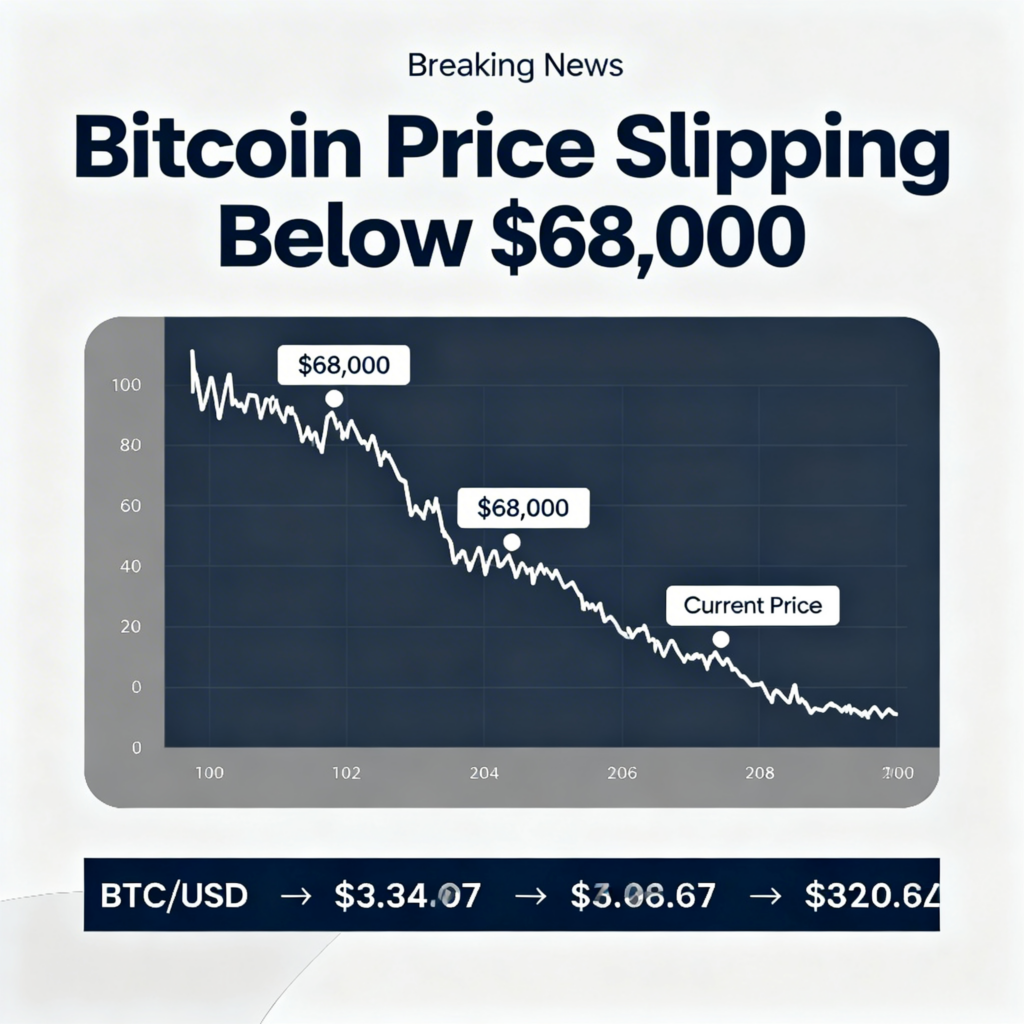
Bitcoin Slides Toward $68K as Crypto Market Gives Back Gains
Cryptocurrency markets weakened heading into the weekend, with most major tokens reversing Friday’s gains. Solana fell about 4%, ether dropped 4.4%, and new on-chain data indicates that roughly 43% of bitcoin’s circulating supply is currently held at a loss.
Bitcoin (BTC) was trading around $67,960 by Saturday morning, down about 3.4% over the past 24 hours and retreating from the highs reached earlier in the week. The price action reflects a pattern that has become increasingly common in recent months, with selling pressure emerging late in the week and pushing prices toward the lower end of their range before the weekend.
Losses were more pronounced among other large cryptocurrencies. Ether declined 4.4% to roughly $1,974, while solana dropped 4% to $84.31. Dogecoin fell 2.9% to around $0.09, BNB slipped 2.6% to $627, and XRP lost 2.2% to trade near $1.37.
Despite the latest drop, the weekly outlook remains slightly positive for several major assets. Bitcoin is still up around 3.6% over the past seven days, while ether has gained about 2.6% during the same period. BNB also recorded a weekly increase of roughly 2.1%. The strong rally earlier in the week helped markets recover from the initial shock caused by rising geopolitical tensions, even though the late-week decline reduced some of those gains.
Meanwhile, the U.S. dollar posted its biggest weekly advance in a year. The currency strengthened as investors factored in rising energy prices, persistent inflation concerns, and the possibility that the Federal Reserve may delay interest rate cuts.
According to Björn Schmidtke, CEO of Aurelion, investors have been shifting capital toward the dollar amid growing uncertainty.
“As tensions escalated in the Middle East last week, investors quickly moved into the safety of the U.S. dollar,” Schmidtke said in comments to CoinDesk. “Markets are now pricing in higher energy prices and renewed inflation fears, which could push potential rate cuts from the Federal Reserve further into the future.”
A stronger dollar tends to weigh on assets priced against it, including bitcoin and other cryptocurrencies, making it harder for risk assets to sustain rallies.
On-chain metrics also point to lingering fragility within the market. Data from Glassnode shows that about 43% of bitcoin’s total supply is currently underwater, meaning those coins were purchased at prices above current levels.
This creates a potential barrier for price rallies. Investors holding losses may look to sell when prices approach their entry levels, increasing supply in the market. That dynamic likely contributed to bitcoin’s inability to hold above $74,000 earlier in the week, as sellers emerged near higher price levels.
One positive signal came from stablecoin activity. According to data from Messari, net stablecoin inflows surged by 415% over the past week to reach $1.7 billion. Daily transfer volumes also rose by nearly 10%.
These inflows may represent liquidity waiting to enter the market, suggesting that some investors still have capital ready to deploy despite the cautious mood. Whether that money flows into bitcoin soon or remains on the sidelines while traders wait for lower prices remains uncertain.
Geopolitical tensions continue to shape market sentiment. The conflict between the United States and Iran remains unresolved, oil prices remain elevated, and disruptions in the Strait of Hormuz continue to threaten global energy supply.
Combined with a stronger dollar, persistent inflation concerns, and expectations that interest rate cuts could be delayed, the macroeconomic environment remains challenging for risk assets.
Although bitcoin briefly climbed to $74,000 earlier in the week, the move ultimately resulted in another round trip within the same range. The rise from roughly $68,000 to $74,000 and back again highlights a market that remains stuck in a familiar trading band rather than establishing a clear new trend.
About The Author


More Stories
Bitcoin faces a potential 30% decline as the four-year market cycle gains momentum, investment firm says.
Cracks emerge in a BlackRock private credit fund, weighing on cryptocurrencies and DeFi tokens.
Cracks emerge in a BlackRock private credit fund, weighing on cryptocurrencies and DeFi tokens.