

Bitcoin Holds $70K as Middle East Tensions and Inflation Concerns Weigh on Markets
Bitcoin (BTC $67,842) traded just above $70,000 on Friday as rising tensions in the Middle East pushed oil higher and traders reevaluated inflation ahead of the U.S. jobs report.
The cryptocurrency briefly reached nearly $74,000 on Wednesday but fell back in a low-liquidity zone alongside U.S. equities. Brent crude surged to $85 per barrel, up roughly 42% since the start of the year, fueling concerns over inflation and prompting European markets to price in a potential ECB rate hike by year-end—reversing earlier expectations of 2025 rate cuts. Higher interest rates could pressure bitcoin and broader crypto markets as investors seek safer, yield-bearing assets.
Altcoins and Token Highlights
DeFi tokens MORPHO and JUP fell 2–3% as traders rotated into dollars, while privacy tokens Zcash (ZEC) and Decred (DCR) dropped 6%. OKX’s OKB surged 23% after a partnership with Intercontinental Exchange (ICE) to launch tokenized stocks and crypto futures. KITE and RIVER each rose roughly 15%.
Derivatives and Market Positioning
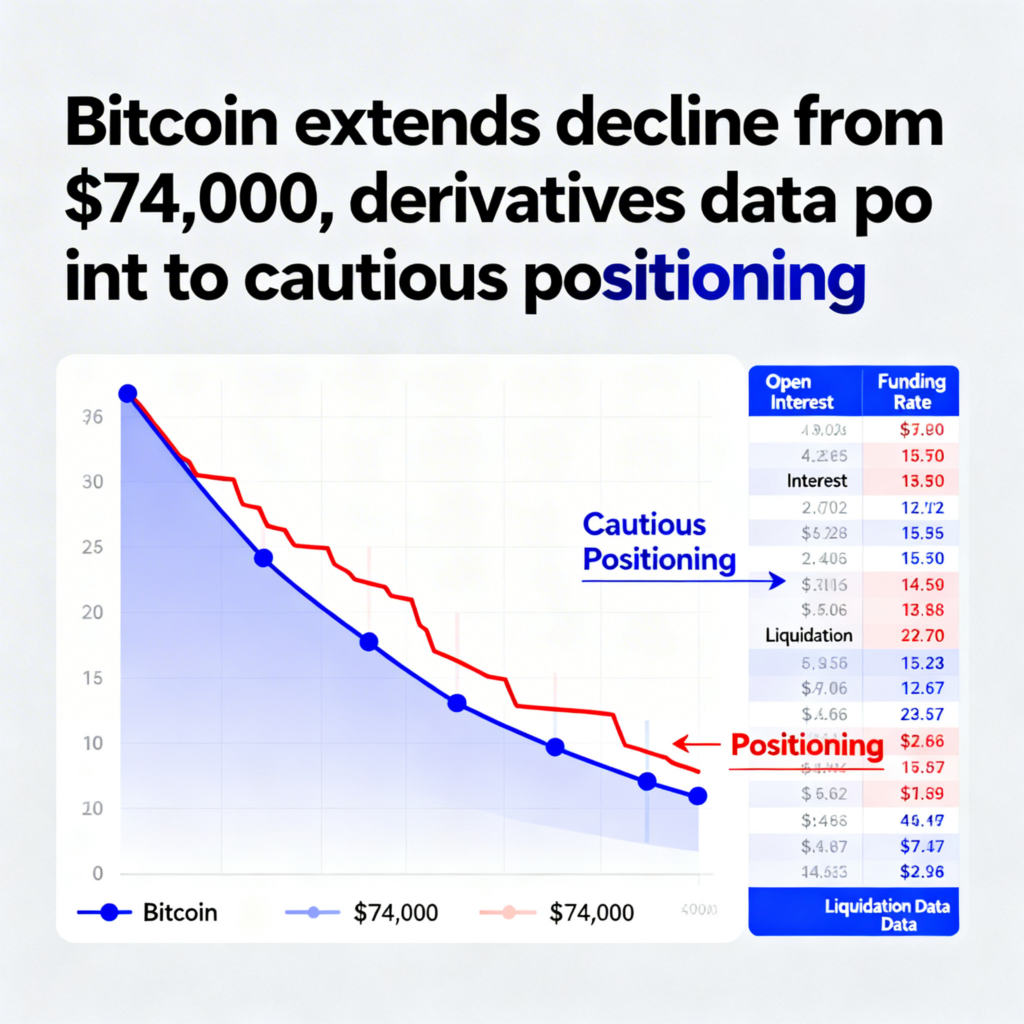
Bitcoin open interest rose to $16.16 billion from $15 billion last week. Retail funding is mostly stable at 0–10%, though Binance shows -2.5%, signaling short hedging. Options markets show cautious optimism: 24-hour call/put volume is 51/49, and the one-week 25-delta skew cooled to 8% from 15%. Near-term implied volatility spiked into backwardation, indicating short-term risk, while longer-term IV remains around 50%. Coinglass reports $257 million in 24-hour liquidations, led by BTC ($121M), ETH ($51M), and other tokens ($15M), with $71,600 flagged as a key liquidation level on Binance.
Crypto markets remain fragile as traders weigh geopolitical risks, inflationary pressures, and short-term volatility.
About The Author


More Stories
BTC approaches $70K before U.S. labor figures, while oil gains on escalating Iran tensions
Vancouver mayor’s Bitcoin investment initiative blocked under municipal and provincial rules.
Bitcoin and the stock market stabilize following early-week dips, yet bonds show lingering uncertainty