

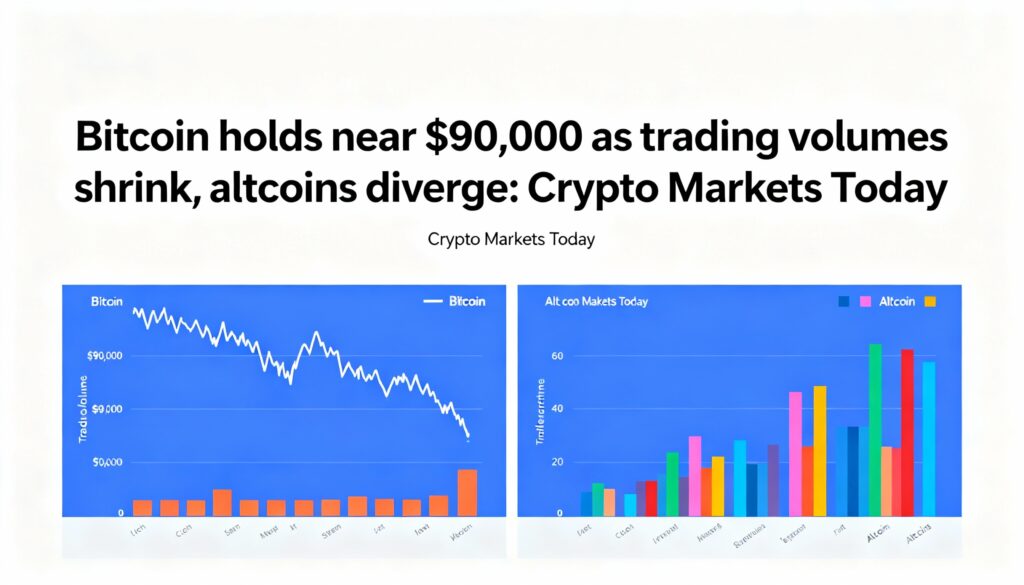
Bitcoin’s prolonged period of sideways trading is increasingly drawing comparisons to the consolidation phase earlier in 2025 that preceded its surge to record highs above $126,000.
BTC has been locked in a narrow, back-and-forth range for several weeks, echoing the choppy price behavior seen at the start of last year. Since Nov. 21, bitcoin has fluctuated between roughly $80,000 and $95,000, approaching 50 days confined within this nearly 20% band. That closely mirrors the consolidation from late February through early April 2025, when prices stalled between $76,000 and $85,000.
That earlier phase lasted 52 days before breaking to the upside, eventually driving bitcoin to a peak above $126,000 in October. Such extended stretches of uneventful price action are often described by traders as “time-based capitulation,” where boredom and frustration push weaker hands out of the market.
As bitcoin has matured, these time-based capitulations have become more common, replacing the sharp drawdowns that defined earlier cycles. The broader uptrend that began in 2023 has taken on a stair-step profile, marked by strong advances, pullbacks and long consolidation periods that set the foundation for the next move higher.
Looking ahead, the macro backdrop may support another breakout. In traditional markets, the economic re-acceleration trade has gained momentum, bolstered by the Atlanta Fed’s GDPNow model, which currently points to real GDP growth of 5.4% in the fourth quarter. While the Federal Reserve may remain on hold in the near term, markets still expect cumulative rate cuts of around 50 basis points in 2026.
Liquidity expectations have also been reinforced by recent political signals. President Donald Trump said Thursday that he is urging the purchase of up to $200 billion in mortgage-backed securities, strengthening the case for ongoing policy support. Former Pimco CEO Mohamed El-Erian said such political pressure could extend beyond rate cuts to include asset purchases aimed at easing housing affordability.
Trump’s comments, El-Erian added, underscore growing public concern over affordability, a dynamic that could eventually force a more aggressive policy response.
Taken together, the resemblance to last year’s consolidation and a potentially supportive macro environment suggest bitcoin’s current range could once again resolve to the upside, echoing the breakout seen in April 2025.
About The Author




More Stories
Bitcoin stabilizes as ether, solana decline amid Middle East turmoil hitting Asian markets.
Bitcoin rebounds near $70,000 with $1.45B flowing into ETFs in the past five sessions.
Monday’s 5% rally in Bitcoin was driven by short squeezes, not new buying interest, an analyst notes.