

Despite thousands of alternative tokens and growing institutional adoption, crypto markets in 2026 continue to move largely in lockstep with bitcoin, offering little real diversification.
A decade ago, the pattern was clear: when bitcoin surged, hundreds of altcoins followed; when it plunged, the entire market fell. Portfolios spread across “diverse tokens” looked varied on paper but collapsed during bitcoin sell-offs. Fast forward to 2026, and little has changed, even as the number of altcoins has grown to several thousand.
Institutions often promote crypto as a multifaceted asset class, with each project boasting unique use cases and investment appeal. In practice, the market remains a one-trick pony: tokens largely mirror BTC’s movements, offering limited protection or alternative performance.
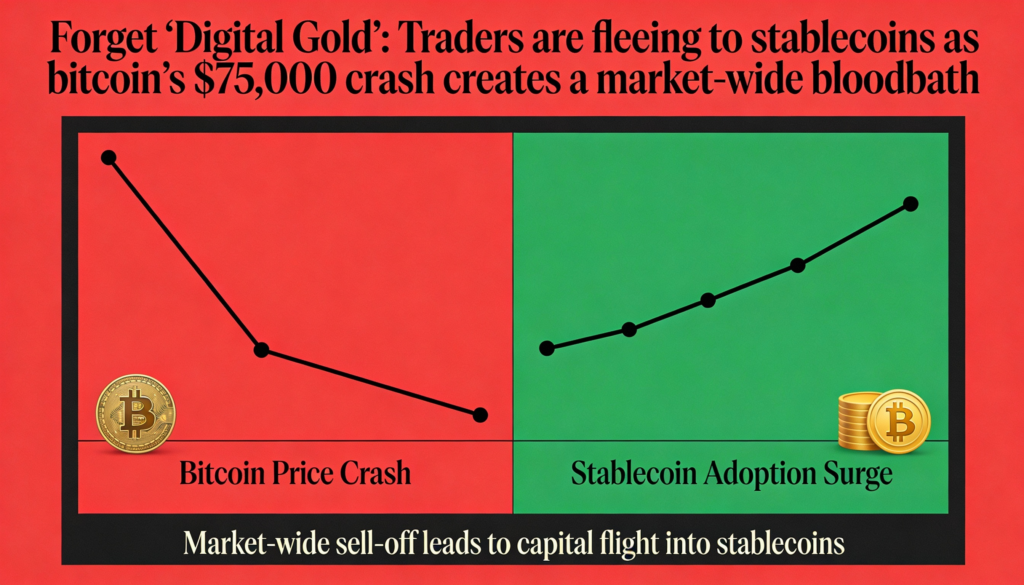
Year-to-date price action underscores this reality. Bitcoin has fallen 14% to $75,000, its lowest level since April last year, while nearly all major and minor tokens have declined by similar—or even greater—amounts. CoinDesk tracks 16 indices representing coins with distinct use cases, and almost all are down 15%–19% this year. DeFi, smart contract, and computing-focused indexes have fared worse, falling 20%–25%.
Even tokens tied to blockchain protocols generating real revenue have declined alongside BTC. Data from DefiLlama shows decentralized exchanges and lending/borrowing platforms such as Hyperliquid, Pump, Aave, Jupiter, Aerodrome, Lighter, Base, and layer-1 blockchains like Tron among the leading revenue generators over the past 30 days. Yet the native tokens of most of these protocols remain in the red. Ethereum-based lending protocol Aave’s AAVE token has fallen 26%, while Hyperliquid’s HYPE stands out, up 20% despite retracing from $34.80 to $30, buoyed by strong tokenized gold and silver trading.
Industry observers attribute this trend to a persistent narrative labeling large-cap tokens like BTC, ETH, and SOL as “safe havens,” while revenue-generating projects are viewed as volatile.
“The jokers that run this industry will keep telling you that BTC, ETH, and SOL are the ‘safe haven majors’—meanwhile, the only things that make money in downturns are $HYPE, $PUMP, $AAVE, $AERO, and some other DeFi protocols,” said Jeff Dorman, chief investment officer at Arca, on X.
Dorman argued that crypto needs to borrow from traditional markets by designating and promoting truly resilient sectors as defensive. “Just as Wall Street highlighted consumer staples or investment-grade bonds as safe-haven assets during downturns, crypto must identify and build consensus around its own defensive sectors to turn data into outperformance,” he said.
Cash-equivalents, particularly stablecoins, also complicate diversification. Markus Thielen, founder of 10x Research, noted that stablecoins allow investors to quickly shift from risk-on to neutral positions. “Unlike equity markets, where capital typically remains invested, stablecoins let traders de-risk during downturns, acting as the defensive allocation within crypto,” he said.
Bitcoin’s dominance remains a structural challenge. Thielen pointed out that BTC consistently accounts for over 50% of total crypto market value, making diversification difficult. Among major tokens, BNB and TRX have historically shown defensive behavior, with TRX down just 1% this year, outperforming BTC.
Institutional participation, fueled by U.S. spot ETFs introduced two years ago, has reinforced BTC’s dominance, which has remained above 50% of the total market since then.
“That concentration is likely to continue,” said Jimmy Yang, co-founder of institutional liquidity provider Orbit Markets. “Ongoing downturns help clear zombie projects and unprofitable businesses, keeping the market tied to BTC.”
For now, despite thousands of altcoins and increasing institutional adoption, the broader crypto market shows little evidence of breaking free from bitcoin’s gravitational pull.
About The Author





More Stories
Several bitcoin indicators continue to trend negatively, casting doubt on the bullish $70,000 support narrative
Another 500 bitcoin moved by Bhutan to exchanges, bringing total 2026 outflows above $150 million.
Circle’s recent decline may be overstated, with analysts pointing to a crypto bill that undercuts Coinbase’s edge.