

Bitcoin’s Rally Falters as Powell Warns of Stagflation Risks Amid Tariff Fears
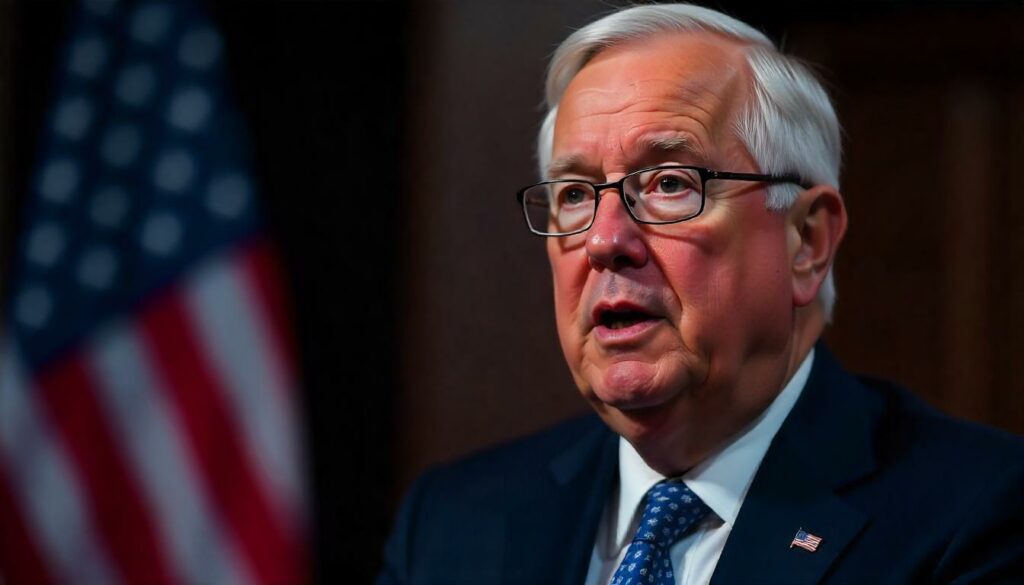
Bitcoin’s recent rally towards $86,000 was abruptly halted on Wednesday afternoon after Federal Reserve Chairman Jerome Powell cautioned about the economic risks stemming from President Donald Trump’s tariff policies. Powell’s warning about stagflation—a combination of high inflation and slow economic growth—led to a swift market reaction, with Bitcoin’s price falling sharply.
In his speech, Powell highlighted that the tariff increases implemented so far were much larger than expected, with more significant economic consequences, including higher inflation and slower growth. This led to concerns about stagflation, a scenario that the U.S. experienced during the 1970s.
“We may find ourselves in a situation where our dual-mandate goals are in tension,” Powell explained, indicating the potential conflict between fighting inflation and fostering economic growth.
Bitcoin, which had been testing the $86,000 level earlier in the day, saw a sharp 2.5% drop following Powell’s remarks, dipping to around $83,700, a 1.5% decline in the last 24 hours. The sudden reversal in Bitcoin’s price highlighted how quickly market sentiment can shift when faced with macroeconomic uncertainties.
Impact on Broader Markets
Powell’s comments did not just affect Bitcoin. U.S. stocks, which had been attempting to recover from early losses, were also hit hard. The Nasdaq saw a sharp 3.4% drop as investors reacted to the Fed chair’s hawkish tone, which signaled a continued focus on controlling inflation rather than stimulating growth.
Quinn Thompson, chief investment officer of hedge fund Lekker Capital, observed that Powell’s speech dampened any expectations of immediate rate cuts from the Fed. Thompson noted that Powell downplayed recent market volatility, including issues in the Treasury market, which further suggested that the Fed would keep a tight grip on monetary policy for the foreseeable future.
“The chances of a rate cut in May are essentially off the table, and even June looks uncertain,” Thompson said. “For Bitcoin and other risk assets, the bull case largely hinges on liquidity and government intervention—both of which seem far from imminent.”
Powell’s Comments on Crypto Regulation
In addition to discussing tariffs and inflation, Powell also acknowledged the growing role of cryptocurrencies in the financial system. As cryptocurrencies like Bitcoin gain mainstream acceptance, Powell indicated that regulatory frameworks for stablecoins would likely evolve. He noted that banking regulations for crypto might be “partially relaxed,” suggesting a more flexible approach to integrating digital assets into traditional financial systems.
This comment aligns with recent moves in the U.S. Senate, where lawmakers have cleared a bill to regulate stablecoin issuers. This represents a significant step toward establishing a clear legal framework for cryptocurrencies, which could ultimately help strengthen the market’s infrastructure.
Outlook for Bitcoin and Crypto
While Powell’s remarks signal potential headwinds in the short term for both traditional markets and crypto, the longer-term outlook remains focused on liquidity and potential regulatory changes. The market will likely remain cautious in the near term as stagflation fears dominate sentiment, but any shift in policy could provide a catalyst for a Bitcoin rebound.
In the meantime, the economic uncertainties surrounding tariffs and inflation continue to shape the market’s trajectory, leaving Bitcoin’s future uncertain in the short run. Investors will be closely watching the Federal Reserve’s actions and the broader macroeconomic environment in the coming months to gauge the direction of the market.
About The Author



More Stories
Bitcoin Stays Above $81K as Markets Stabilize and Oil Prices Rise
Bitcoin Holds Near $81,700 as Altcoins Recover and PEPE Jumps 13%
Bitcoin May Be Breaking Away From Its Midterm Cycle Bottom Pattern