

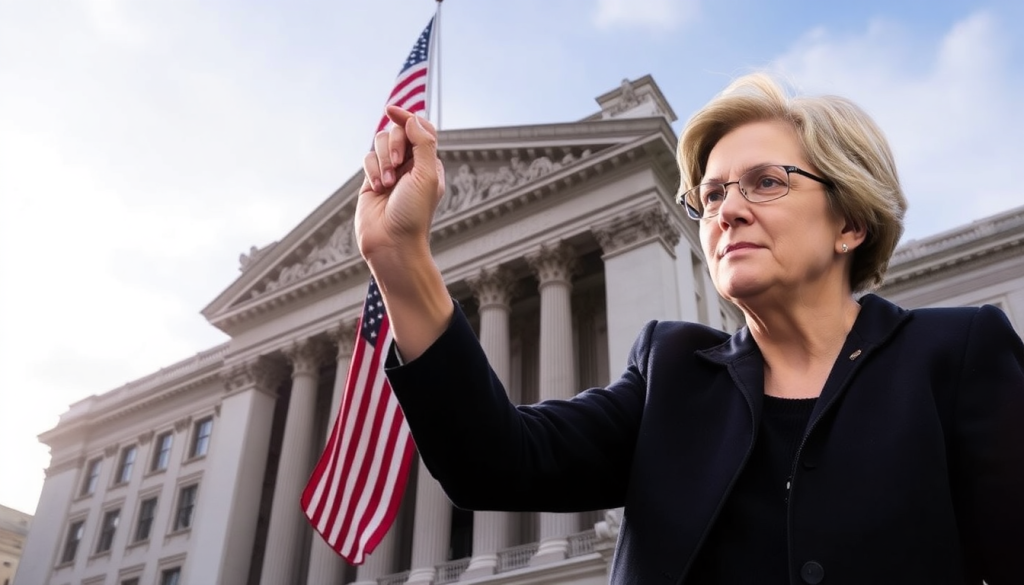
Elizabeth Warren is poised to take the lead of the Senate Banking Committee, placing one of Washington’s most vocal financial policy critics in a powerful position to shape America’s next regulatory agenda. Her anticipated appointment could increase scrutiny of Wall Street, cryptocurrency companies, and the rules surrounding retail day trading.
Following the Democrats’ victory in both chambers of Congress during the November 2026 midterm elections, Warren is expected to gain greater authority to investigate financial institutions and challenge federal regulators. Her agenda could reach beyond conventional banking, potentially putting day trading platforms, financial market structures, and prediction markets under closer congressional examination.
The Massachusetts senator has consistently called for stronger safeguards in financial markets to protect everyday investors. Assuming the committee chairmanship would give her additional tools to pursue those objectives through congressional hearings, investigations, and proposed legislation.
Elizabeth Warren’s Agenda Could Put Retail Day Trading Under Pressure
The debate surrounding day trading is not limited to Americans’ ability to buy and sell stocks. It also involves the financial infrastructure responsible for executing retail orders, determining prices, and directing trades across different market venues.
Warren has already weighed in on a significant part of this issue. On October 1, she joined four Democratic senators in calling on SEC Chairman Paul Atkins to retain important protections under the Regulation National Market System.
The senators pushed back against proposed modifications to Rules 611 and 610(e), arguing that weakening these requirements could expose retail investors to less favorable trade execution prices. They warned that institutional market participants could benefit from the changes while individual investors faced increased trading costs.
These protections are particularly relevant to day trading platforms and their users. Active traders rely on competitive order execution, transparent pricing, and consistent access to market liquidity to complete transactions efficiently.
Warren’s involvement suggests that retail trading infrastructure is already part of her broader regulatory priorities. As committee chair, she could have additional opportunities to question the SEC about how brokerage firms, exchanges, and market makers process orders submitted by individual investors.
However, her position should not be interpreted as a direct proposal to prohibit or restrict day trading. So far, Warren has not introduced a confirmed plan to limit how frequently retail investors can buy or sell securities.
Crypto, Prediction Markets, and Wall Street Could Face Greater Oversight
Retail day trading represents only one area where Warren could expand financial oversight. The senator has also expressed concerns about prediction markets, particularly the potential use of confidential information to profit from contracts tied to political, economic, and other public events.
According to The Wall Street Journal, Warren plans to examine suspected insider trading in prediction markets, alongside issues involving private equity firms, major banks, and cryptocurrency companies. Democrats are also preparing investigations into financial connections between the crypto industry, President Donald Trump, and his family.
Warren is expected to take control of the Senate Banking Committee and has indicated that she wants to investigate alleged financial arrangements linking the cryptocurrency industry with the president.
These potential investigations could increase pressure on companies with political and financial connections. They may also shift congressional attention away from crypto market structure legislation, an area where the industry has been seeking greater regulatory clarity.
For day trading businesses, the impact could be indirect but significant. Greater congressional attention to retail investor protections, prediction markets, and financial intermediaries could influence how federal regulators oversee trading platforms and brokerage services.
Critics of Warren’s approach argue that additional regulatory requirements could raise compliance expenses, discourage innovation, and weaken competition. Supporters, however, believe stronger oversight is necessary to protect individual investors and ensure fair access to financial markets.
The central question is how aggressively Warren will pursue her regulatory priorities after taking the committee chairmanship. With greater control over congressional hearings, investigative powers, and legislative initiatives, she could gain considerable influence over how Wall Street, cryptocurrency businesses, and retail trading platforms interact with federal regulators.
About The Author





More Stories
Bitcoin Stabilizes After AI Stock Rout as Traders Await U.S. Jobs Data
Bitcoin Reclaims $76K as Spot ETFs Record $430M in Outflows After Tech Sell-Off
Bitcoin Crashes to $76K as AI Stock Selloff Triggers Wall Street Rout