

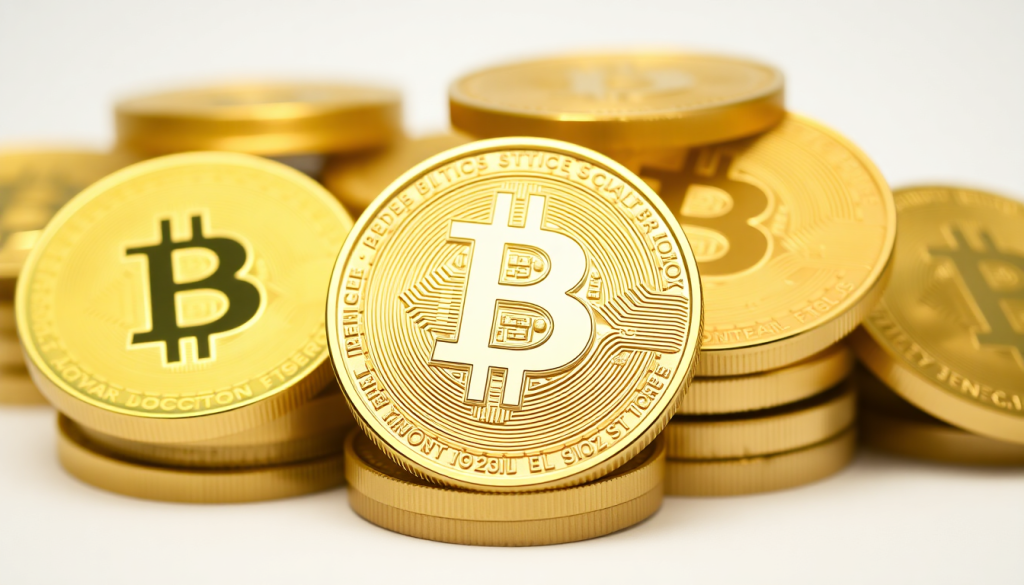
Bitcoin has gained significant recognition on Wall Street, but blockchain researchers still cannot identify the owners of a large share of its circulating supply. According to Galaxy’s October snapshot, approximately 11.1 million BTC, or around 55% of the total supply, remains unattributed.
These coins could be held by individual investors, institutions that researchers have yet to identify, or people who have permanently lost access to their wallets.
Alex Thorn, Galaxy’s head of research, believes the figures highlight how widely self-custody remains used despite the expansion of crypto exchanges, investment funds and institutional custodians. Under this approach, investors retain control of their private keys instead of entrusting their Bitcoin to a third party.
“More than half of all BTC supply is sitting in addresses with no known attribution despite all the institutionalization and centralized ownership over the years, still a ton of bitcoin (maybe even most) is held by individuals in self-custody,” Thorn wrote on X.
Xapo Bank, a financial institution focused on Bitcoin, responded that the large volume of coins held in unidentified wallets reflects the long-standing participation of retail investors. The bank argued that individual investors helped establish the market more than a decade ago, before traditional financial institutions began embracing the asset.
It added that Bitcoin’s core appeal lies in allowing people to control their own money without depending on conventional financial intermediaries.
Bitcoin is the native cryptocurrency of the Bitcoin blockchain, a public ledger that enables users worldwide to transfer value. Miners validate transactions and record them on the network, receiving newly issued BTC as rewards. This decentralized structure is often cited as an example of a market in which participants can compete without relying on a central authority.
Bitcoin addresses function similarly to bank account numbers, allowing anyone to inspect the balance and transaction history associated with an address without automatically revealing the owner’s identity. Research firms such as Galaxy analyze blockchain activity and use known wallet connections to attribute addresses to exchanges, funds and other major holders.
Why Unidentified Bitcoin Ownership Needs Context
The fact that 55% of Bitcoin’s supply has no known attribution does not mean all those coins belong to individual investors who are deliberately holding them for the long term.
Some of the Bitcoin may be permanently inaccessible because owners have forgotten their private keys or died without passing on the necessary access information.
Other coins were mined during Bitcoin’s early years. Some may be associated with miners other than the entity linked to the Patoshi pattern, a collection of early Bitcoin blocks that researchers believe were mined by a single participant commonly associated with Bitcoin’s anonymous creator, Satoshi Nakamoto.
The unattributed category may also contain holdings belonging to unidentified institutions, including investment funds, corporations and over-the-counter trading desks. These desks facilitate large transactions privately rather than through public exchanges. Additionally, some institutional custodians distribute assets across numerous wallet addresses, making their holdings more difficult to identify and track.
By comparison, Galaxy has attributed the remaining 45% of Bitcoin’s supply to identifiable entities and categories. These include cryptocurrency exchanges, exchange-traded funds led by BlackRock, the U.S. government and the largest individual category in its breakdown: the Satoshi Nakamoto Patoshi-pattern holdings, estimated at 1,123,658 BTC. Galaxy tracks these coins separately under its “Satoshi-era miner pattern” classification.
Despite the growing influence of spot Bitcoin ETFs and institutional investors, the largest portion of the cryptocurrency’s supply remains linked to addresses whose owners are unknown. That uncertainty highlights an important distinction between tracking Bitcoin on its public blockchain and determining who actually controls it.
About The Author




More Stories
Bitcoin Stays Near $80K as Oil Prices Ease Ahead of Fed Decision
CalPERS Cuts Big Tech Exposure as AI Fears Intensify Neocloud Sell-Off
Crypto Week Ahead: Fed, ECB and BOJ Rate Decisions, Coinbase Earnings