

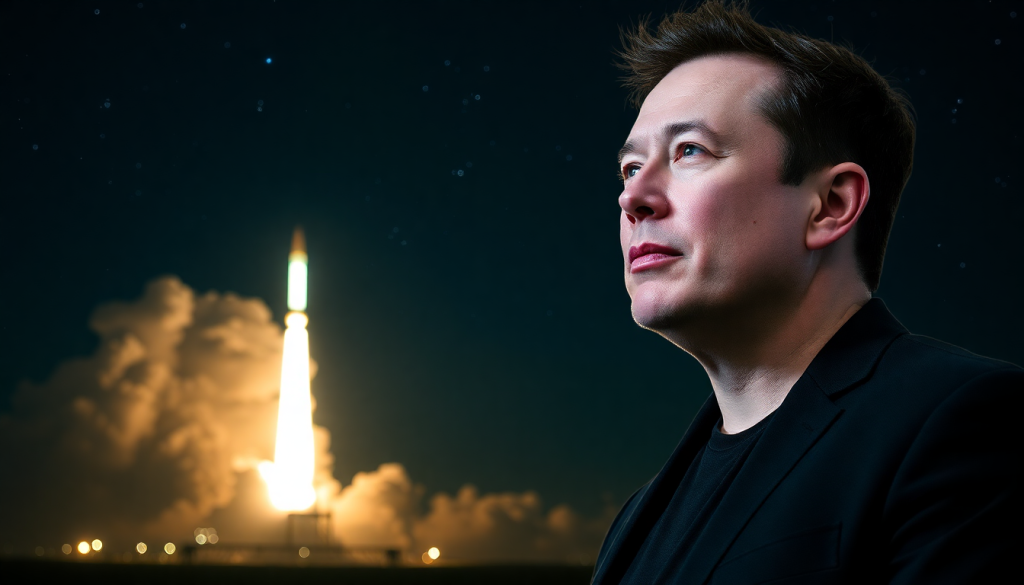
SpaceX has secured $40 billion in debt financing to purchase graphics processing units (GPUs), as Elon Musk warns that a major consolidation could reshape the market for smaller AI cloud providers.
The Nasdaq-listed company, SpaceX (SPCX), has raised $40 billion in debt to acquire the high-performance processors that power artificial intelligence systems.
Musk announced the financing on X while warning about the future of neoclouds, companies that generate most of their revenue by operating data centers and renting out AI computing capacity. His comments could add to investor concerns about the sustainability of AI spending, potentially increasing risk aversion across Wall Street and cryptocurrency markets.
The financing primarily consists of callable debt, allowing SpaceX to repay it before maturity. The funds could support GPU deliveries expected during the first half of 2027, although Musk did not explicitly confirm that purpose. Reuters previously reported that SpaceX was in discussions with banks and asset managers to secure $40 billion for Nvidia AI chips.
Musk attributed SpaceX’s ability to obtain the financing to its strong credit standing and recurring revenue from Starlink’s internet services and rocket launches. Because these businesses operate independently of AI data centers, SpaceX has a more diversified revenue base than companies that depend almost entirely on AI infrastructure.
Musk said access to debt financing has become increasingly difficult for businesses without substantial revenue outside the AI data center industry.
He warned on X that debt markets had, over recent weeks, largely cut off financing for companies lacking significant income streams independent of AI data centers.
Musk also predicted that more than 200 neocloud companies could eventually consolidate, leaving only a small number of survivors.
The development highlights the enormous capital requirements of the AI computing boom. Constructing large-scale GPU clusters can cost tens of billions of dollars, giving companies with diversified businesses and strong credit profiles a financing advantage. By contrast, lenders are becoming more cautious toward firms whose business models rely almost entirely on AI infrastructure.
Venture capitalist Chamath Palihapitiya had previously raised concerns about the financial health and management of many neocloud operators. He argued that major cloud providers, including Amazon, Microsoft and Google, were moving cautiously on agreements and increasingly prioritizing computing capacity for their own operations.
Palihapitiya also warned that delays in data center construction could leave expensive GPUs and partially completed projects underused. If those assets fail to generate sufficient revenue, some operators could struggle to cover their financing costs in 2027.
Meanwhile, investors have grown more concerned about whether the massive investments flowing into artificial intelligence will deliver adequate returns. Those concerns have weighed on AI-related stocks and the broader market.
Nasdaq futures were trading near 29,080 at the time of writing, marking a substantial decline from levels above 30,000 earlier in the month.
About The Author




More Stories
Bitcoin Stays Near $80K as Oil Prices Ease Ahead of Fed Decision
CalPERS Cuts Big Tech Exposure as AI Fears Intensify Neocloud Sell-Off
Crypto Week Ahead: Fed, ECB and BOJ Rate Decisions, Coinbase Earnings