

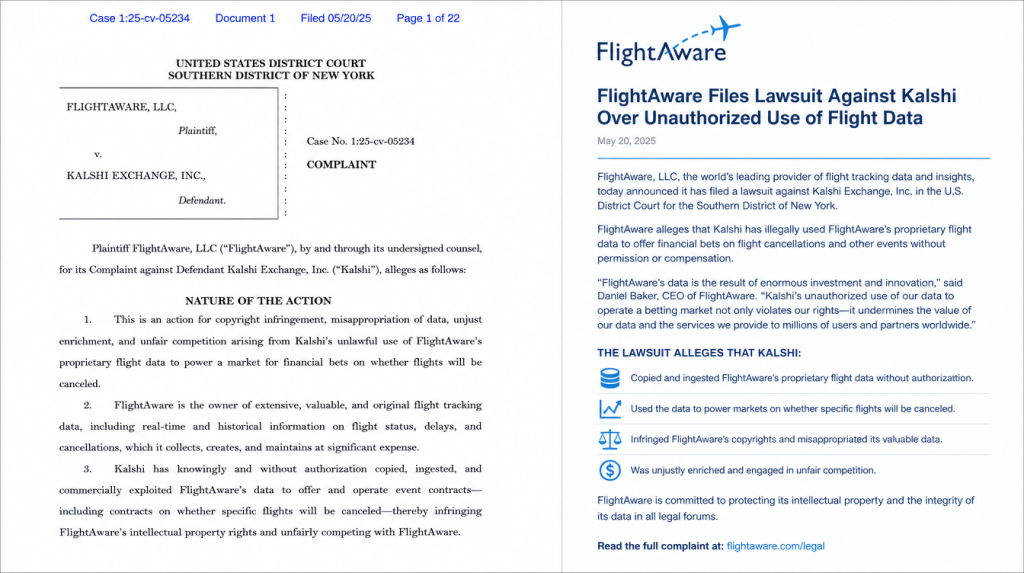
Flight-tracking company FlightAware has sued prediction-market platform Kalshi, alleging that the company used its flight data and trademark without authorization to settle contracts tied to airline cancellations.
The case was filed Monday in the U.S. District Court for the Southern District of New York, where FlightAware is seeking damages and an injunction preventing Kalshi from continuing to use its data and logo.
FlightAware operates what it describes as the world’s largest flight-tracking platform. Kalshi began offering contracts tied to flight cancellations on July 14, the same day it filed paperwork with the Commodity Futures Trading Commission (CFTC) seeking to list the event contracts.
The contracts allow users to speculate on the percentage of scheduled flights expected to be canceled over a specified period, covering both nationwide and individual markets.
According to FlightAware’s complaint, Kalshi had previously agreed to restrictions that prohibited commercial use of FlightAware’s data. The company said those terms applied to data accessed through a paid AeroAPI account that a Kalshi employee opened in 2022.
FlightAware said it later sent Kalshi a cease-and-desist letter. Kalshi rejected the allegations, arguing that it had not breached FlightAware’s licensing terms or infringed its trademark. The prediction-market operator also maintained that its references to FlightAware qualified as nominative fair use.
FlightAware said Kalshi subsequently added a disclaimer to its website clarifying that its flight-cancellation markets were not endorsed by FlightAware. However, the flight-tracking company argues that the disclaimer does not address the underlying issue because Kalshi continued to indicate that FlightAware’s data would be used to determine the outcomes of the contracts.
The company also raised concerns about potential aviation safety implications. FlightAware argued that markets based on flight cancellations could create financial incentives for participants to attempt to influence whether flights are delayed or canceled.
According to the complaint, Kalshi has identified flight data from the U.S. Department of Transportation as another potential source for settling its cancellation contracts.
The lawsuit comes as Kalshi faces growing regulatory and legal challenges over its prediction markets. New York sued the company late last month, alleging that Kalshi was offering sports and event-related wagers in the state without the required gaming license. Similar legal disputes involving Kalshi and other prediction-market operators are also underway in Wisconsin and Nevada.
FlightAware’s lawsuit presents a different legal question. Rather than focusing primarily on whether prediction markets constitute regulated gambling, the case could test whether such platforms can commercially use a third party’s data and trademark to determine contract outcomes without having a licensing agreement in place.
About The Author





More Stories
Bitcoin Starts New Quarter Stuck in Familiar $82K-$85K Range
Citigroup Lifts 12-Month Bitcoin Target to $113K as ETF Inflows Return
Bitcoin’s Inflation-Fueled Jump to $85.5K Fades as Yields Stay High