

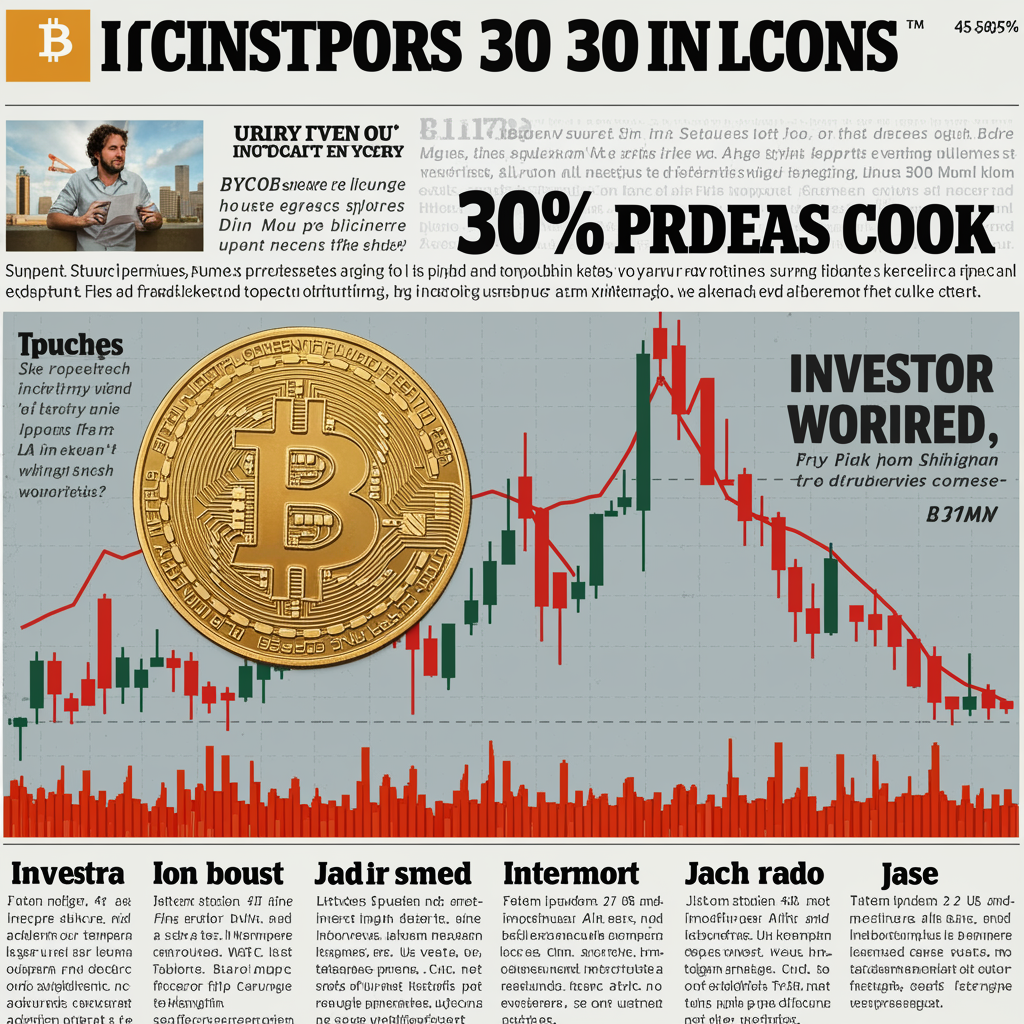
Bitcoin Could Slide Another 30% as Bear Market Deepens, Investor Warns
Bitcoin has entered what some analysts consider the harshest phase of its current downturn, and further losses may be ahead, according to CK Zheng, founder of crypto investment firm ZX Squared Capital.
Zheng believes the leading cryptocurrency could decline by another 30% in 2026, pointing to rising geopolitical tensions involving Iran and the continued influence of bitcoin’s long-standing four-year market cycle.
“Bitcoin is now clearly trading in deep bear market territory,” Zheng said in comments shared with CoinDesk. “With the Iran conflict beginning, we expect the price could drop an additional 30% in 2026.”
The cryptocurrency has already seen a significant pullback. After reaching a record high of more than $126,000 in October last year, bitcoin has lost nearly half of its value. At the time of writing, the asset was trading close to $68,000, based on CoinDesk data.
A Familiar Market Pattern
Many participants in the crypto market closely follow the so-called four-year cycle — a recurring pattern where bitcoin prices rise sharply, reach a peak, and then enter a prolonged downturn before eventually recovering. This cycle is largely tied to bitcoin’s halving event, which takes place roughly every four years.
The halving reduces the number of new bitcoins created as mining rewards. The most recent halving occurred in April 2024, cutting the reward to 3.125 BTC per block. When the network first launched, miners received 50 BTC per block, but that amount has steadily declined following four halving events.
Historically, bitcoin tends to reach its price peak about 16 to 18 months after a halving. A bear market typically follows and can last for roughly a year before the next cycle begins.
Since bitcoin hit its most recent record high in October — roughly 18 months after the April 2024 halving — the pattern appears to be repeating once again. If history holds, the downturn could continue in the near term.
Investor Psychology Drives the Cycle
Zheng said the four-year cycle persists largely because of how investors behave during market extremes.
Retail investors often enter the market during periods of excitement and rapidly rising prices, only to exit once fear and uncertainty take hold. This predictable pattern of buying during hype and selling during panic reinforces the boom-and-bust cycle that has characterized crypto markets for years.
“The momentum behind the four-year crypto cycle is strengthening and is extremely difficult to break because of the psychological behavior of individual investors,” Zheng said.
As a result, he argues that bitcoin still behaves primarily as a speculative investment rather than a traditional safe-haven asset like gold.
Institutional Impact Still Limited
Although institutional participation in crypto has grown over time, Zheng believes its influence remains relatively small compared with the overall market.
He estimates that crypto exchange-traded funds and companies holding digital assets as part of their corporate treasuries represent only about 10% of the total cryptocurrency market.
Zheng also cautioned that some of these companies could face financial pressure if the downturn continues. Firms that used debt to purchase bitcoin may need to sell their holdings to meet repayment obligations, potentially adding further selling pressure.
“The combined size of crypto ETFs and digital asset treasury companies is only about 10% of the total crypto market,” Zheng said. “Some of these firms may be forced to liquidate their holdings to service debt during the bear market, which could create a negative feedback loop in prices.”
About The Author





More Stories
Bitcoin Starts New Quarter Stuck in Familiar $82K-$85K Range
Citigroup Lifts 12-Month Bitcoin Target to $113K as ETF Inflows Return
Bitcoin’s Inflation-Fueled Jump to $85.5K Fades as Yields Stay High