

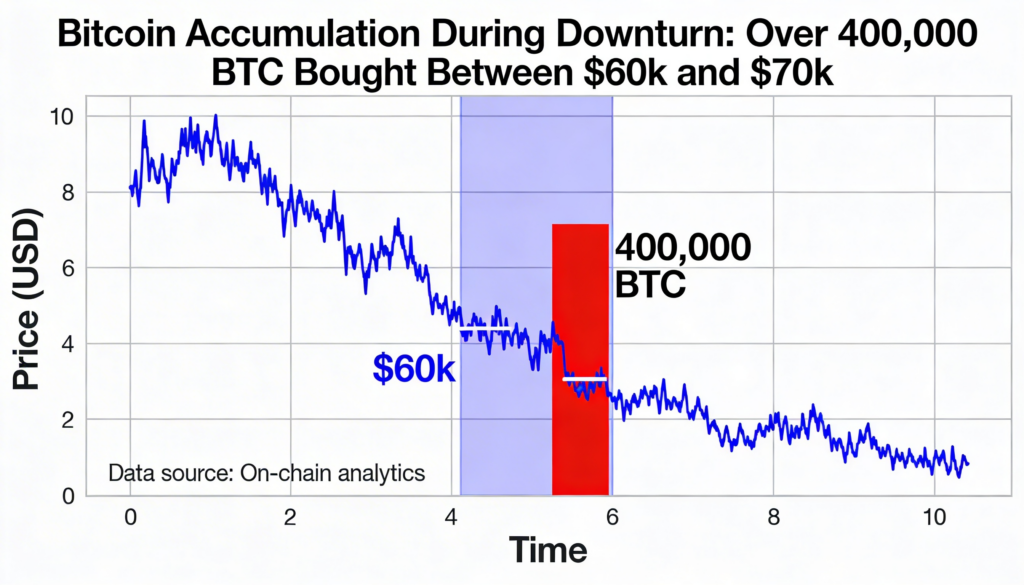
On-chain data from Glassnode shows that investors accumulated heavily as Bitcoin slid into the $60,000–$70,000 range during the recent correction.
Supply concentrated within that band has increased from roughly 997,000 BTC at the start of the year to about 1.43 million BTC, a gain of approximately 429,000 BTC, or 43%. As a result, more than 8% of bitcoin’s non-exchange circulating supply now carries a cost basis between $60,000 and $70,000, creating a sizable ownership cluster in that zone.
The accumulation follows a sharp market retracement. Bitcoin has dropped from around $88,000 on Jan. 1 to near $63,000, and is currently about 50% below its October all-time high of $126,000.
The figures are derived from Glassnode’s Unspent Transaction Output Realized Price Distribution (URPD) metric, which segments circulating supply by the price at which each coin last moved on-chain. The entity-adjusted version aggregates addresses controlled by the same owner, filters out internal transfers, and excludes exchange balances, offering a clearer picture of true investor cost basis.
Earlier analysis described the $70,000–$80,000 area as an “air pocket,” a historically thin trading zone. That dynamic was evident during the latest downturn, when bitcoin fell from $80,000 to $70,000 in just five days between Jan. 31 and Feb. 5, underscoring how quickly prices can traverse lightly traded regions before encountering stronger supply concentrations below.
With a substantial share of supply now clustered in the $60,000–$70,000 range, that band may serve as a key support area as the market searches for stability.
About The Author





More Stories
U.S. Adds Just 29,000 Jobs in September as Unemployment Rate Hits 4.2%
Bitcoin Dominance Nears 60% as Crypto Traders Shift Into Risk-On Mode
Bitcoin Open Interest Surges $2.3B as Traders Increase Bullish Bets