

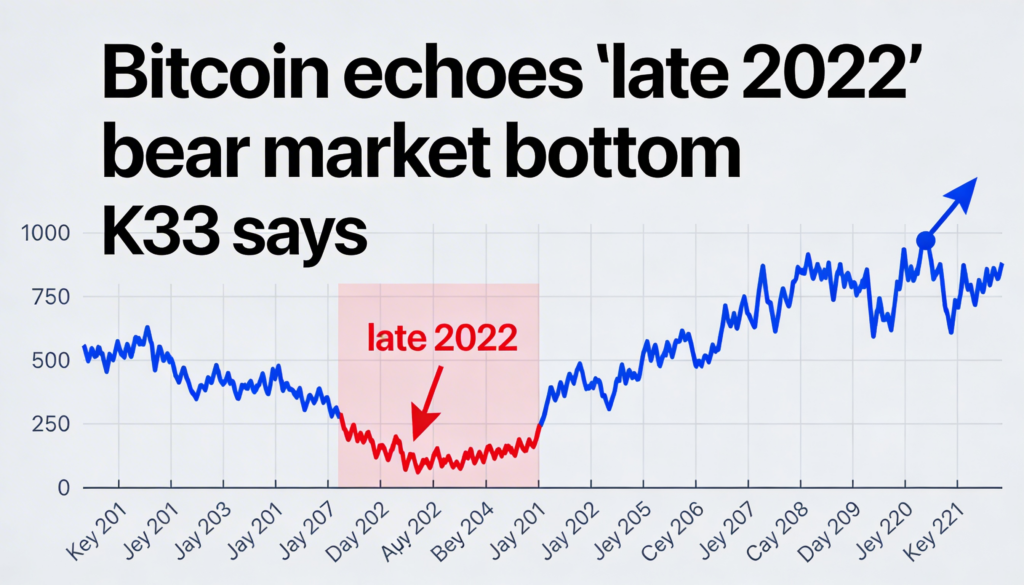
Bitcoin’s recent sharp decline may be transitioning into a late-cycle bear phase, but investors should not anticipate an immediate rebound, according to Vetle Lunde, head of research at K33.
Lunde said current market conditions resemble late September and mid-November 2022 — periods that marked the bottoming phase of the previous bear market and were followed by lengthy consolidation. At that time, bitcoin traded between $15,000 and $20,000, roughly 70% below its 2021 peak.
Today, BTC has stabilized within a narrower $65,000 to $70,000 range. K33’s regime model — which blends derivatives positioning, ETF flows, technical indicators and macroeconomic data — indicates the market may once again be approaching a cyclical trough.
Activity dries up
A defining feature of late-stage bear markets is declining participation, and recent data suggests speculative excess has largely been flushed out.
Spot trading volumes dropped 59% week-over-week, while perpetual futures open interest slid to a four-month low. Funding rates have remained negative, signaling subdued risk appetite. According to Lunde, this type of cooldown often follows heavy liquidation events, as traders reassess exposure and rebuild positions.
U.S.-listed spot bitcoin ETFs have also recorded a peak-to-trough reduction of 103,113 BTC in holdings since early October — the largest on record. Even so, more than 90% of peak bitcoin-denominated ETF exposure remains intact despite BTC retracing nearly 50%.
Sentiment metrics reinforce the cautious tone. The Crypto Fear and Greed Index recently fell to an all-time low reading of 5 and has stayed below 10 for most of the past week, reflecting extreme pessimism.
Consolidation likely before the next move
Taken together, the signals suggest bitcoin is “likely near, or at, a global bottom,” Lunde said. However, he expects an extended period of consolidation between $60,000 and $75,000, similar to prior late-bear regimes that delivered limited short-term returns.
For long-term investors, current levels may offer an attractive opportunity to accumulate — though patience will be required.
James Check, on-chain analyst and co-founder of Checkonchain, echoed that view, noting that bitcoin historically spends much of its time moving sideways before undergoing sharp repricing phases. Those explosive rallies often occur within a small number of trading days, typically early in a bull cycle and again during its later stages.
Attempting to precisely time market bottoms and tops, he warned, often leads investors to miss the initial surge.
While prolonged consolidation can test conviction, historical cycles suggest that steady positioning — rather than perfect timing — has tended to reward disciplined investors.
About The Author




More Stories
Bitcoin Falls Below $82K as AI Fears Resurface and DeFi Tokens Sink
Crypto Traders Value Reliance Jio IPO at $110 Billion
Asian Markets Slide as Bitcoin Pulls Back and China Enters Bear Territory