

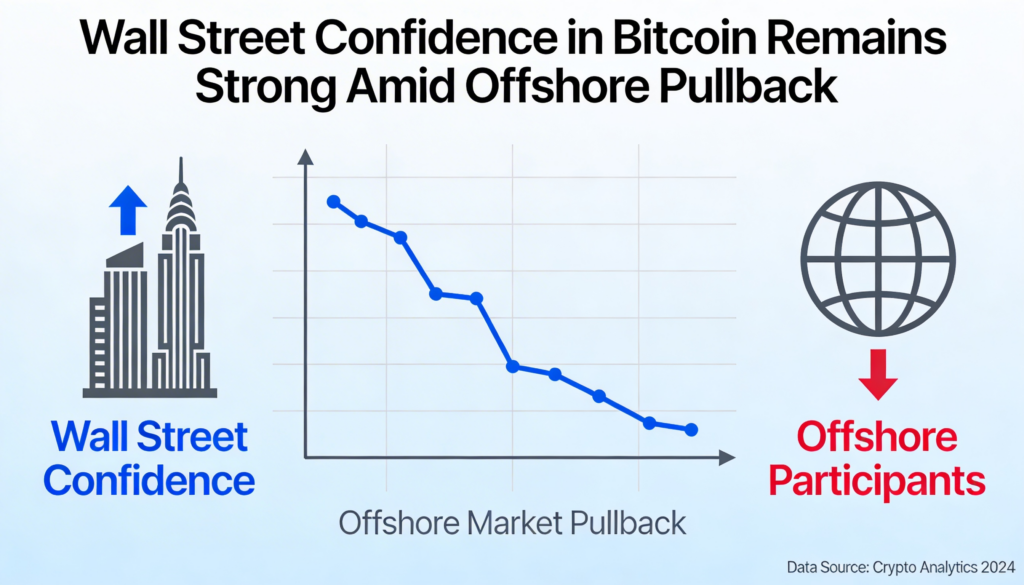
A regional split in sentiment is becoming more pronounced in Bitcoin markets, as U.S.-based institutional investors continue to show resilience while offshore traders scale back risk.
The contrast is most visible in the futures market. On CME Group — widely used by hedge funds and institutional desks — traders are still paying a relatively strong premium to maintain long bitcoin exposure, according to Greg Cipolaro, head of research at NYDIG. The one-month annualized futures basis on CME remains elevated compared with offshore exchange Deribit, where the premium has narrowed more sharply.
Cipolaro said the steeper decline in offshore basis points to waning appetite for leveraged long positions outside the U.S., with the CME-Deribit spread serving as a real-time barometer of geographic risk tolerance.
Earlier this month, bitcoin briefly dropped to around $60,000 before staging a recovery. Some observers blamed the sell-off on renewed fears that advances in quantum computing could eventually compromise bitcoin’s cryptographic security. However, NYDIG’s research suggests that explanation lacks supporting evidence.
Bitcoin’s performance has closely tracked shares of publicly traded quantum-computing companies such as IonQ (IONQ) and D-Wave Quantum (QBTS). If concerns about quantum threats were the primary driver, those stocks would likely have gained as bitcoin declined. Instead, they moved lower alongside BTC, indicating a broader retreat from speculative, long-duration assets.
Search trends also cast doubt on the theory. Data from Google Trends shows that interest in the phrase “quantum computing bitcoin” tends to spike during price rallies rather than downturns, suggesting the narrative gains traction in bullish phases, not periods of stress.
About The Author





More Stories
U.S. Adds Just 29,000 Jobs in September as Unemployment Rate Hits 4.2%
Bitcoin Dominance Nears 60% as Crypto Traders Shift Into Risk-On Mode
Bitcoin Open Interest Surges $2.3B as Traders Increase Bullish Bets