

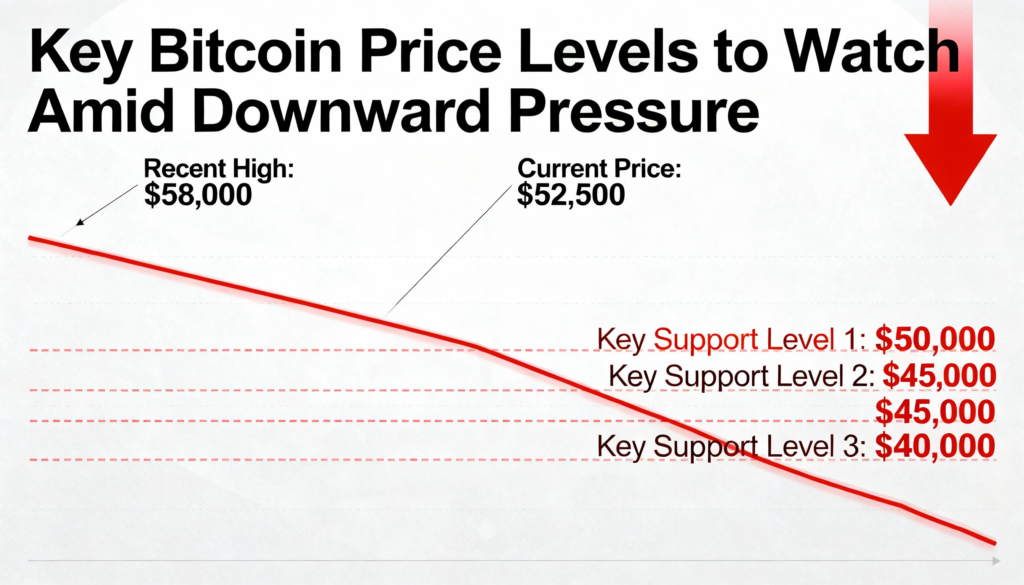
Bitcoin remains in a downtrend, with several technical and onchain levels now standing out as critical areas of support.
The price slid to around $86,000 when CME futures reopened on Sunday after the weekend pause, before staging a modest rebound. Despite the recovery, overall market structure continues to point lower.
The initial drop left a CME gap extending up to roughly $89,265. Such gaps form when bitcoin’s spot price moves while CME futures are closed and have historically tended to be revisited by price.
Bitcoin last reached an all-time high on Oct. 6, about 111 days ago, and has since fallen roughly 30%, reinforcing bearish momentum.
A break below $80,000 would likely trigger a retest of April 2025 levels near $76,000, seen during the selloff linked to President Donald Trump’s tariff push.
For now, the market is being held together by the 100-week moving average, a widely watched long-term support level that represents the average closing price over that period. Since the Nov. 21 low near $80,000, bitcoin has consistently held above this level, which currently sits around $87,145.
Bitcoin has already moved below its 50-day moving average, just above $90,000, a commonly used gauge of short-term trend direction.
Below current prices, several additional support zones come into focus. The Difficulty Regression Model, which estimates bitcoin’s average production cost based on mining difficulty, sits near $89,300. In bear markets, prices often gravitate toward or trade below production cost.
Further down, the aggregate cost basis of U.S. spot bitcoin ETF buyers stands at $84,099, a level that has acted as support in recent months. Onchain data also show the 2024 average exchange withdrawal price — effectively the cost basis of 2024 buyers — at $82,713.
Finally, the True Market Mean Price, calculated as Investor Cap divided by Active Supply, sits just above $80,000, aligning closely with the November low and underscoring its importance as a potential mean-reversion level.
About The Author





More Stories
Bitcoin Falls Below $82K as AI Fears Resurface and DeFi Tokens Sink
Crypto Traders Value Reliance Jio IPO at $110 Billion
Asian Markets Slide as Bitcoin Pulls Back and China Enters Bear Territory