

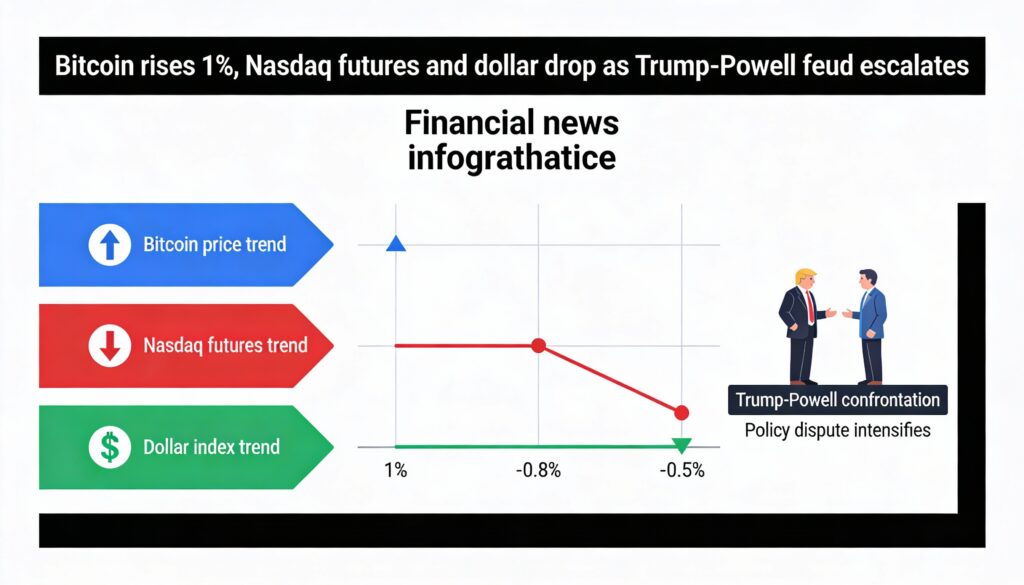
Bitcoin Gains 1% as Trump-Powell Feud Pressures Stocks and Dollar
Bitcoin (BTC $91,233.29) climbed 1% Monday afternoon in Hong Kong, bucking the trend of falling U.S. stock futures amid mounting tensions between President Donald Trump and Federal Reserve Chair Jerome Powell. Nasdaq futures dropped 0.8%, S&P 500 futures fell 0.5%, and the dollar index slid to 99.00 from Friday’s 99.26 peak.
BTC briefly reached $92,000 but remained within last week’s range of $89,000 to $95,000, according to CoinDesk data. The cryptocurrency’s divergence from the Nasdaq suggests investors are seeking a safe haven amid the political uncertainty. Advocates have long promoted Bitcoin as a hedge against fiscal and monetary risks, while gold, the traditional safe haven, surged to a record $4,600 per ounce.
The latest tensions erupted after Powell revealed that the Trump administration had threatened him with a criminal indictment over renovations at the Federal Reserve headquarters. Powell described the threat as politically motivated, aimed at pressuring the Fed to cut interest rates.
Trump has repeatedly criticized Fed policies, calling for more aggressive rate cuts since his 2025 inauguration. He has labeled Powell a “numbskull” and threatened to assert greater White House influence over monetary decisions. While the Fed reduced rates by 25 basis points to 3.5% last month, rates are expected to remain steady at least until March, with ultra-low rates unlikely anytime soon.
Despite escalating attacks, prediction markets do not anticipate Powell being removed early; his term expires in May. Nevertheless, political pressure on central banks amid persistent inflation can undermine investor confidence and destabilize currency markets. Turkey’s lira collapse, driven by President Erdogan’s interference with central bank independence, serves as a warning. However, the dollar’s status as the global reserve currency makes a drastic collapse in the U.S. improbable.
About The Author

More Stories
Bitcoin Stays Above $81K as Markets Stabilize and Oil Prices Rise
Bitcoin Holds Near $81,700 as Altcoins Recover and PEPE Jumps 13%
Bitcoin May Be Breaking Away From Its Midterm Cycle Bottom Pattern