

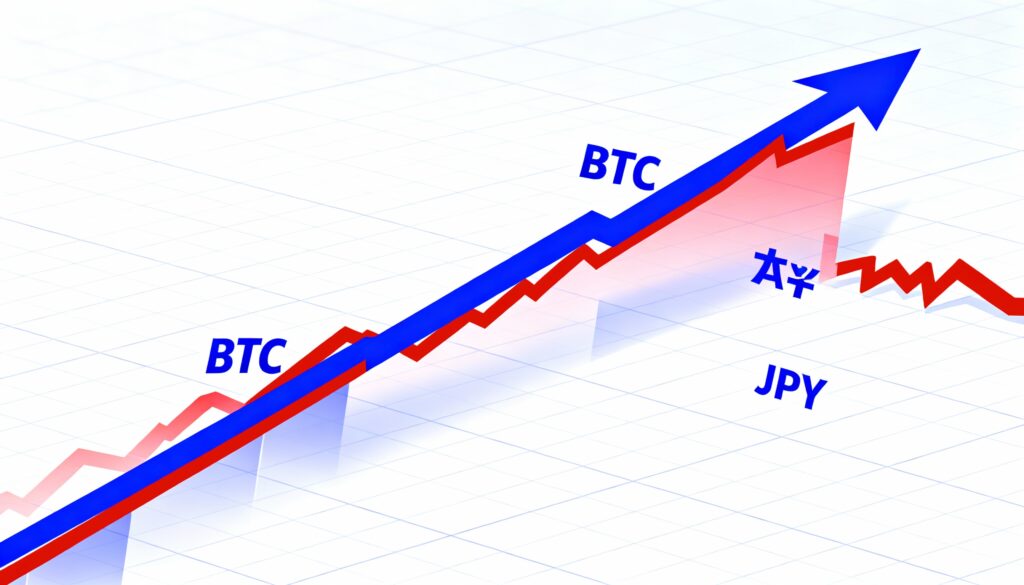
Bitcoin traders may need to look beyond the dollar index, as the cryptocurrency’s relationship with the Japanese yen has strengthened to unprecedented levels.
Data from TradingView show the 90-day correlation between bitcoin and Pepperstone’s Japanese yen index has climbed to 0.86, the highest reading on record. Such a strong correlation indicates that the two assets have been moving in the same direction with unusual consistency over the past three months.
In practical terms, about 73% of bitcoin’s price movements during the period can be attributed to moves in the yen. This figure, known as the coefficient of determination, is derived by squaring the correlation coefficient and provides a simple measure of how closely the two assets track one another.
Pepperstone’s JPY Index, or JPYX, is a currency index CFD that gauges the yen’s strength against a basket of four major currencies: the euro, U.S. dollar, Australian dollar and New Zealand dollar.
The unusually tight link suggests bitcoin, long viewed as an asset with low correlation to traditional markets, has recently been trading in the yen’s orbit. Over the past 90 days, BTC has tended to rise and fall alongside the Japanese currency, weakening its role as a portfolio diversifier and turning what was once promoted as “digital gold” into a leveraged bet on yen moves.
However, such relationships are often fleeting. Correlations between cryptocurrencies and traditional assets, including currencies and equities, can shift rapidly as market conditions change.
Bitcoin topped out in early October before declining over the following two months, a move that coincided with an extension of the yen’s broader downtrend. Selling pressure in both markets began to ease after mid-December.
The yen has been under pressure since April last year amid mounting concerns about Japan’s fiscal sustainability, which have driven government bond yields higher. With a debt-to-GDP ratio near 240%, Japan ranks among the most indebted economies globally, even though much of its debt is held domestically.
That debt burden leaves the Bank of Japan with limited options. Raising interest rates would push up debt-servicing costs and worsen fiscal strains, while keeping rates low risks accelerating the yen’s decline.
Some analysts argue that Japan’s fiscal stress is already being reflected in currency markets through a sharply weaker yen, and that only a potential U.S. recession may provide the country with temporary relief.
About The Author





More Stories
JPMorgan Forecasts 10% Annual Bitcoin Returns, Outpacing Stocks, Bonds and Gold
Bitcoin Falls to $81,400 as Asian Chip Stocks Slide and Traders Hedge Against Further Losses
Live Updates: AI Selloff Intensifies as Market Uncertainty Continues