

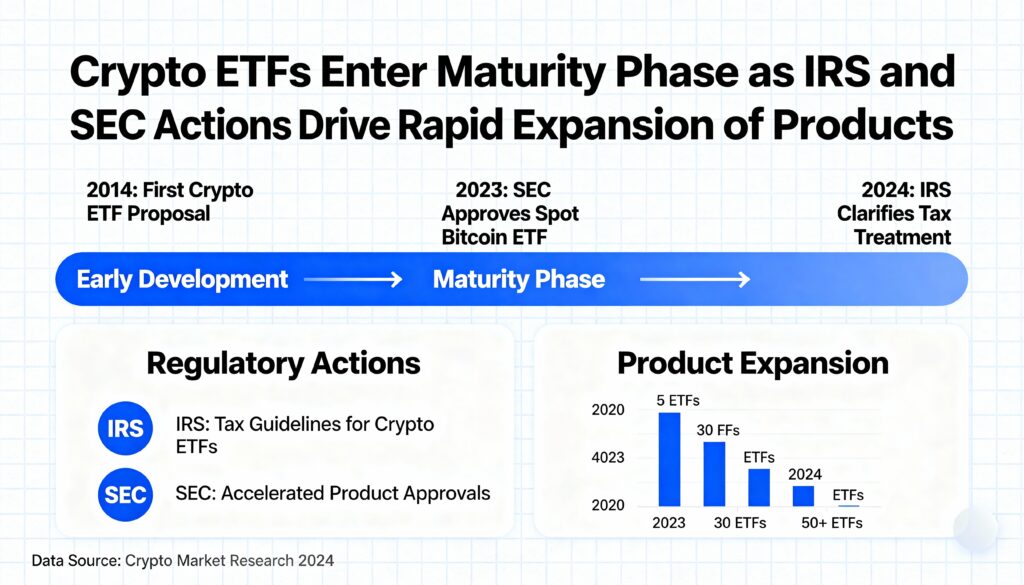
Crypto ETFs Mature as Staking, Indexes, and Regulation Transform the Market
Crypto ETFs are evolving from speculative instruments into core investment holdings, driven by staking guidance, standardized listing rules, and the emergence of diversified index products.
At Tuesday’s ETP Forum in New York, a panel of ETF issuers, auditors, lawyers, and derivatives experts discussed how the market has shifted and the operational frameworks enabling rapid product growth.
From Speculation to Mainstream Investment
The panel emphasized a clear shift: crypto is no longer primarily a trading asset driven by momentum and retail hype. Today, ETFs hold a significant share of bitcoin’s ($86,124) market cap, and new spot funds for ether ($2,815) and major altcoins are available through mainstream brokers. Investors increasingly expect these funds to act as long-term holdings rather than short-term trades.
Staking Guidance Brings Yield into ETFs
IRS guidance allowing funds to stake assets such as ether and solana ($129) without risking tax compliance is a key development. Staking secures blockchain networks while generating predictable yield. ETFs can now distribute these rewards, blending on-chain economics with regulatory oversight. This introduces new operational responsibilities, including managing asset lockups, liquidity, and redemption processes.
SEC Standards Accelerate Growth
The SEC’s generic listing rules allow certain crypto ETFs to launch without individual exemptions, speeding product approvals. Funds for Solana, Litecoin ($83), and Hedera (HBAR) followed quickly. The standards rely on surveillance agreements and market volume data to detect manipulation and are expected to expand, opening the door for additional ETFs.
Operational and Index Innovations
The rapid product rollout has driven internal innovations. Auditors handle quarterly reporting and tax events from forks or protocol changes. Swap desks provide leverage, staking yield, and synthetic exposure without holding tokens directly. In-kind transactions help ETFs closely track underlying assets.
Index ETFs are also gaining traction, offering diversified exposure and automatic rebalancing under the 40 Act framework, which enables active management and tax efficiency—advantages over grantor trusts.
Digital Asset Treasuries and Derivatives
Digital asset treasuries (DATs) offer leveraged token exposure but differ from ETFs in transparency and redemption mechanics. Futures and derivatives remain complex for retail investors, though increased CFTC oversight may expand adoption. ETFs remain the most accessible regulated path for most participants.
Conclusion
Crypto ETFs have moved beyond novelty. They now operate within robust regulatory, operational, and strategic frameworks, with the focus shifting from launching products to maintaining infrastructure capable of supporting a growing ecosystem of strategies, assets, and investors.
About The Author





More Stories
Bitcoin Stays Near $80K as Oil Prices Ease Ahead of Fed Decision
CalPERS Cuts Big Tech Exposure as AI Fears Intensify Neocloud Sell-Off
Crypto Week Ahead: Fed, ECB and BOJ Rate Decisions, Coinbase Earnings