

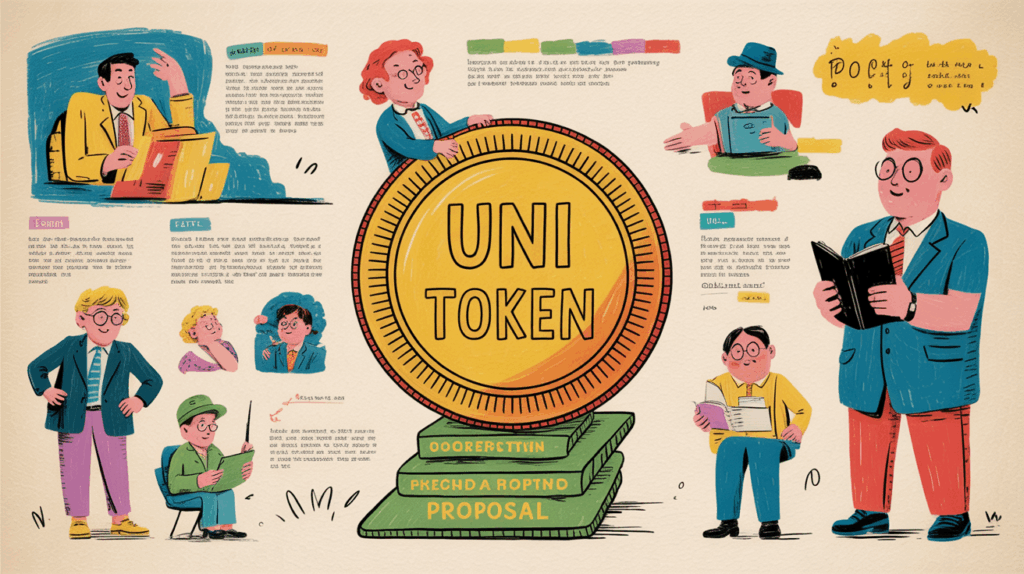
Uniswap’s latest proposal, dubbed “UNIfication,” could transform the protocol’s massive yet underutilized trading volume into real value for UNI token holders.
The initiative, introduced by Uniswap Labs and the Uniswap Foundation, seeks to activate long-delayed protocol fees, burn up to 100 million UNI (roughly $940 million at current prices), and merge the Foundation and Labs into a single operational and economic entity.
Currently, Uniswap holds $5.05 billion in total value locked (TVL), with a $5.9 billion market cap and $9.4 billion fully diluted valuation. Its price-to-fees ratio, at about 4.7x, is low compared to Layer 1 and Layer 2 networks when factoring in realized on-chain revenue.
Over the past 30 days, Uniswap processed $148.5 billion in trading across 36 chains. Ethereum led with $15.9 billion, BNB Chain contributed $4.7 billion, and Arbitrum $3.3 billion. This generated roughly $227.4 million in fees, annualized to $2.77 billion, none of which currently flows to UNI holders.
Key Changes Under UNIfication
With the proposal, roughly one-sixth of trading fees would be directed into a protocol revenue pool, equating to about $130 million annually. Coupled with the token burn, this introduces a 2.5% annual reduction in supply—essentially a buyback mechanism linking network activity to scarcity.
Analysts estimate that, under moderate growth, this could provide UNI holders with an implied yield of around 3% annually, making it one of DeFi’s first governance tokens with tangible cash flow.
Structural Overhaul
The merger of the Foundation into Labs represents a shift from a grant-based governance model to a more centralized, execution-driven framework. While some DAO purists may view this as centralization, the change provides clarity, accountability, and measurable value capture—traits increasingly demanded by investors.
This approach echoes other successful DeFi projects, such as Hyperliquid’s HYPE, whose buyback mechanisms drove a 900% token gain in the past year.
If approved, UNIfication could mark a new era for Uniswap and DeFi: token value driven less by governance hype and more by protocol revenue and real on-chain performance.
About The Author


More Stories
Bitcoin Stays Near $80K as Oil Prices Ease Ahead of Fed Decision
CalPERS Cuts Big Tech Exposure as AI Fears Intensify Neocloud Sell-Off
Crypto Week Ahead: Fed, ECB and BOJ Rate Decisions, Coinbase Earnings