


Rising stablecoin adoption may pull up to $1 trillion from emerging market banks over the next three years, as savers seek safer, more liquid alternatives to local financial institutions, according to a report by Standard Chartered.
Stablecoins—cryptocurrencies pegged to assets like the U.S. dollar or gold—offer households and companies in developing economies a hedge against weak currencies and high inflation. Adoption has been particularly strong in countries such as Egypt, Pakistan, Bangladesh, and Sri Lanka, where deposit flight risks are pronounced.
Even without offering yields, now restricted under the U.S. GENIUS Act, stablecoins attract users focused on capital preservation. Standard Chartered forecasts the global stablecoin market will reach $2 trillion by 2028, with roughly two-thirds of demand coming from emerging markets.
While stablecoins threaten traditional bank deposits, they also promise faster payments and cheaper remittances. The bank warns that unless local regulators act swiftly, the current “stablecoin summer” could turn into a prolonged challenge for emerging-market banks.
About The Author




More Stories
Robinhood expands share repurchase program to $1.5 billion amid ongoing stock decline
Bitcoin gains modestly on ceasefire optimism; oil sinks 4%
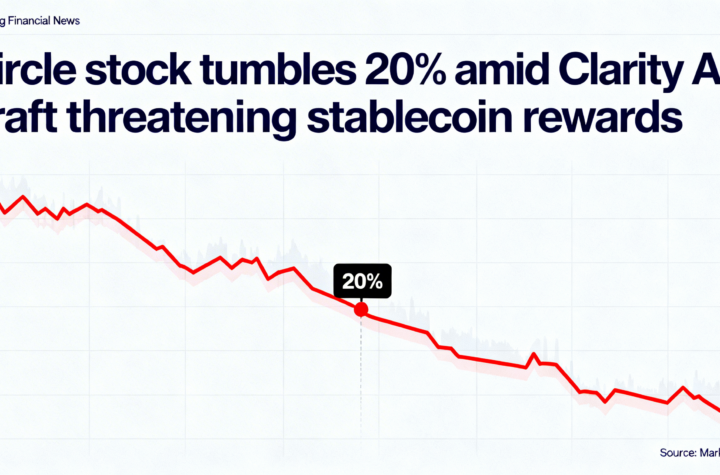
Circle stock drops 20% after new Clarity Act draft threatens stablecoin yield incentives.